
Today I worked with a kindergartener who has mastered CVC words with blends at the beginnings and ends of words (for example, “slept” and “brand”). It was time to move on to long vowels.

I started with two-letter words ending in “e” (be, he, me, and we). I explained for small words ending in “e,” the “e” is pronounced differently. Even so, the child wanted to say the words as if they ended in a short e.
In one way this was satisfying to me, her teacher. She had learned the rules about pronouncing short vowels.
But in another way it was frustrating. Her brain was saying she didn’t accept the logic of one letter representing two sounds. Until now every letter of every word we have read together has had one sound only. But now I am changing the rules. It’s like I am telling the child that until now your little brother has had one name, but from now on he is going to have two names, and you have to remember when to call him John and when to call him Fred. Huh?
Some students learn sight words in school at the same time they are learning phonics. For them, words like “me” and “go” are memorized rather than sounded out. But my student has not learned sight words, so I needed to switch gears.
I stopped focusing on two-letter words. Instead, I focused on words ending in “ee.” It was easier for my student to accept that “ee” represents a different sound from “e.” So, we worked on reading words like “bee,” “fee,” “lee,” “see,” and “tee.” I added nonsense words like “dee,” “pee,” “vee,” and “zee” as well to extend the practice.
At our next class I plan to continue delaying two-letter words like “he” and “me.” Instead I will continue with “ee” words, adding ending letters and blends. “Bleed,” “creek,” “heel,” “seem,” “green,” “sleep,” and “feet” are some examples.
Until now, my student has moved quickly in acquiring reading skills. But I may need to slow down now and make sure she can go back and forth from short-vowel words to long-vowel words and vice-versa. For some students this is easy. For others, it takes months. We will see.
 I suggest you give your child a pretest to see what reading skills your child has learned well, and what ones he has not yet grasped.
The words on this pretest are more or less divided into four kinds of words in this order:
1. Short (closed) vowel, one-syllable words. These include one- and two-letter words, words beginning or ending with blends and digraphs (black, church) words which end in twin consonants (fell, jazz), words which end in “ck,” and words to which an “s” can be added to make plural words or certain verbs (maps, runs).
I suggest you give your child a pretest to see what reading skills your child has learned well, and what ones he has not yet grasped.
The words on this pretest are more or less divided into four kinds of words in this order:
1. Short (closed) vowel, one-syllable words. These include one- and two-letter words, words beginning or ending with blends and digraphs (black, church) words which end in twin consonants (fell, jazz), words which end in “ck,” and words to which an “s” can be added to make plural words or certain verbs (maps, runs).
 2. Long (open) vowel, one-syllable words. These include words ending with silent “e,” words with double vowels which have only one vowel pronounced (goes, pear), and certain letter combinations (ild, old). They also include words with “oi,” “oy,” “ow” and “ou” letters.
3. Two– and three-syllable words which follow the above rules (catnip, deplete) and two- and three-syllable words which don’t follow the above rules but which follow a pattern (light, yield). These words include words with certain suffixes (le, ies) and words with a single consonant between two vowels (robin, motel).
2. Long (open) vowel, one-syllable words. These include words ending with silent “e,” words with double vowels which have only one vowel pronounced (goes, pear), and certain letter combinations (ild, old). They also include words with “oi,” “oy,” “ow” and “ou” letters.
3. Two– and three-syllable words which follow the above rules (catnip, deplete) and two- and three-syllable words which don’t follow the above rules but which follow a pattern (light, yield). These words include words with certain suffixes (le, ies) and words with a single consonant between two vowels (robin, motel).
 4. Exceptions. These include words with silent letters (gnaw, lamb), words from other languages (debris, cello), and words which fit no pattern (business).
Ask your child to read the words in the pretest below. Each row across tests a particular phonics skill. If you child hesitates at all, that is the place to begin teaching him or her phonics. I will talk more about how to teach these four groups of phonics skills in my next blog.
Phonics assessment
bad, hem, fit, don, pug, am, if, lass, jazz
lock, Mick, bills, cliffs, mitts, catnip, Batman
grand, stent, frisk, stomp, stuck
chuck, shun, them, branch, brush, tenth
star, fern, birds, fork, purr, actor, doctor, victor
muffin, kitten, collect, pepper, gallon
complex, helmet, falcon, napkin, after
tantrum, muskrat, constant, fulcrum, ostrich
skate, bike, Jude, mole, dare, shore, tire, pure
need, cheer, aim, hair, bay, pie, boat, oar, Joe, low, soul
fruit, few, child, blind, fold, colt, roll, light, high
earn, worm, rook, pool
fault, claw, all, chalk, Walt
boil, so, pound, down
comet, dragon, liver, salad, denim
total, ever, student, basic, demon, vital
apron, elude, Ethan, Owen, ideal, usurp
inside, nearly, absent, unicorn, degrade, tripod
advance, offense, fence
gripped, planned, melted, batted, handed
sweeping, boiling, thinning, flopping, biking, dating
rapper, saddest, finer, bluest, funnier, silliest
easily, busily, massive, active, arrive, wives
keys, monkeys, armies, carried
action, section, musician, racial, crucial, nuptials
brittle, pickle, carbon, dormer
parcel, decent, gem, urge, badge
lose, sugar, nature, sure
graph, Phil, then, moth
bomb, thumb, gnat, gnome, high, sign
whip, whirl, echo, ghoul, knee, knob
could, calf, folk, hustle, listen, wrist
alone, bread, bear, chief, young, squaw, swan, waltz, word
decision, exposure, gigantic, polarize, occupant, quarantine
If you want to help your child learn to read, one of the best things you can do is not to let him guess. Most words can be deciphered if the student has a phonics background.
Also, don’t let your child depend on pictures for meaning once the child starts to read. Most adult reading material is not accompanied by graphics. Students must learn to gain meaning from the text alone.
If you have decided to help your child read this summer, good for you. You don’t need to be a rocket scientist to help your child read better. Years of research show that the best way to teach reading is to start with letter sounds (phonemes) and then to combine those letter sounds into words (phonics). If you do this in a systematic way, such as following the four-part sequence I describe above, your child will learn to read.
4. Exceptions. These include words with silent letters (gnaw, lamb), words from other languages (debris, cello), and words which fit no pattern (business).
Ask your child to read the words in the pretest below. Each row across tests a particular phonics skill. If you child hesitates at all, that is the place to begin teaching him or her phonics. I will talk more about how to teach these four groups of phonics skills in my next blog.
Phonics assessment
bad, hem, fit, don, pug, am, if, lass, jazz
lock, Mick, bills, cliffs, mitts, catnip, Batman
grand, stent, frisk, stomp, stuck
chuck, shun, them, branch, brush, tenth
star, fern, birds, fork, purr, actor, doctor, victor
muffin, kitten, collect, pepper, gallon
complex, helmet, falcon, napkin, after
tantrum, muskrat, constant, fulcrum, ostrich
skate, bike, Jude, mole, dare, shore, tire, pure
need, cheer, aim, hair, bay, pie, boat, oar, Joe, low, soul
fruit, few, child, blind, fold, colt, roll, light, high
earn, worm, rook, pool
fault, claw, all, chalk, Walt
boil, so, pound, down
comet, dragon, liver, salad, denim
total, ever, student, basic, demon, vital
apron, elude, Ethan, Owen, ideal, usurp
inside, nearly, absent, unicorn, degrade, tripod
advance, offense, fence
gripped, planned, melted, batted, handed
sweeping, boiling, thinning, flopping, biking, dating
rapper, saddest, finer, bluest, funnier, silliest
easily, busily, massive, active, arrive, wives
keys, monkeys, armies, carried
action, section, musician, racial, crucial, nuptials
brittle, pickle, carbon, dormer
parcel, decent, gem, urge, badge
lose, sugar, nature, sure
graph, Phil, then, moth
bomb, thumb, gnat, gnome, high, sign
whip, whirl, echo, ghoul, knee, knob
could, calf, folk, hustle, listen, wrist
alone, bread, bear, chief, young, squaw, swan, waltz, word
decision, exposure, gigantic, polarize, occupant, quarantine
If you want to help your child learn to read, one of the best things you can do is not to let him guess. Most words can be deciphered if the student has a phonics background.
Also, don’t let your child depend on pictures for meaning once the child starts to read. Most adult reading material is not accompanied by graphics. Students must learn to gain meaning from the text alone.
If you have decided to help your child read this summer, good for you. You don’t need to be a rocket scientist to help your child read better. Years of research show that the best way to teach reading is to start with letter sounds (phonemes) and then to combine those letter sounds into words (phonics). If you do this in a systematic way, such as following the four-part sequence I describe above, your child will learn to read.


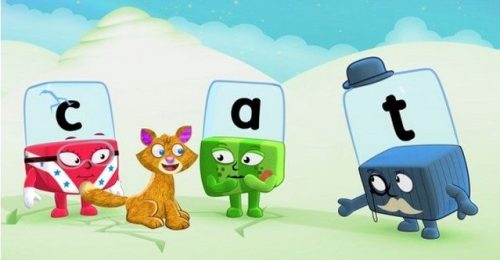
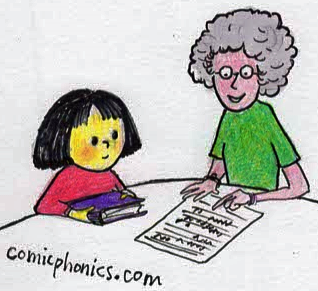



 When children learn to read using a phonics method, they start by learning that each sound has a one-to-one relationship with a letter. This makes reading seem logical to little children. See a B and say “b.” As teachers we don’t muddy beginning readers’ thinking by telling new readers that some letters mean more than one sound or that some letters, when paired with other letters, make totally different sounds or that some sounds can be represented by multiple groupings of letters. We save that for later, after children have “mastered” the concept of CVC words and blends.
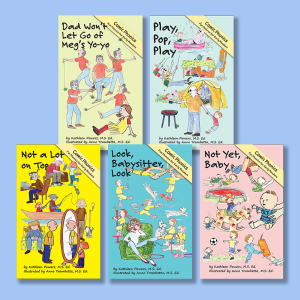


 comicphonics for early readers