For a struggling reader, intervene as early as possible, says new research

child with adult helping to readIf you notice a child is having trouble reading, intervene as soon as possible, even in preschool.

So conclude researchers who looked at the reading achievement of students for twelve years.  The researchers concluded that struggling readers should receive help as early as possible.

Their research shows that struggling readers are obvious to teachers in first grade (the earliest grade included in the research).  Without help, these kids will not improve over time.

In short, there is no advantage in waiting to intervene.  Start now.

Many children do not receive help until third grade–too late, according to the researchers.  This might be because many states have passed laws saying that all children should be reading by third grade.

Participants in the study were 414 people in the Connecticut Longitudinal Study who were assessed annually every year in elementary, middle and high school.

For more information, read “Achievement Gap in Reading Is Present as Early as First Grade and Persists through Adolescence” in the November 2015 issue of The Journal of Pediatrics.

Georgia Common Core test results for individual schools and counties announced

Georgia released school by school and county by county Common Core test results on November 16.

sstudent filling in dots for testResults show what everyone expected:  in most schools students scoring below grade level outnumbered students scoring at or above grade level. In third grade, for example, 60.1% of students performed below grade level in English; in fourth grade, 62.9% of students scored below grade level; and in fifth grade, 60.8% of students scored below grade level.

But a closer look at particular schools shows a bleaker picture. Many schools exceeded 60% of students scoring below grade level. Several third grades around Georgia had more than 90% of students scoring below grade level. But a few schools had 70% score at or above grade level. The biggest discrepancy I noticed in a quick review of third grade raw numbers was one school that had not quite 3% score at or above grade level, and another school which had a little over 80% score at or above grade level.

Counties also showed wide discrepancies.  Warren County, a rural county with a 27% poverty rate and a small number of college graduates, showed a mean score of 442 for third graders.  Meanwhile Forsyth County, the wealthiest county in Georgia with many college graduates and advanced degree holders, showed a mean score of 544.  That is more than 100 points higher than Warren County.   Atlanta’s mean score for third graders was 493.

What does it all mean?

  • Some schools are doing a much better job preparing their students for the kind of learning tested on the Milestone tests.
  • Where a child goes to school matters.

Milestone test results cannot be compared to the results of students in other states because Georgia created its own tests which were given only to Georgia students. This thwarts one of the purposes of the Common Core, which is to allow a comparison of educational achievement by students all over the country.

In the future, whether a child passes to the next grade will be influenced by these test scores. For tests taken in the spring of 2016, Georgia promises test results to be made known sooner.

If you are a parent or a teacher of a Georgia public school student, you can see how your child’s school did and how your county did on these tests by grade level by going to the links below.  The data displayed is raw numbers and they are inconvenient to read.  For example, column headings are not repeated throughout the data so you must scroll up and down to find out what the numbers refer to.  Also, everything is single-spaced, and there are so many columns that they do not all fit on most computer screens at the same time.  School districts smaller than a county, such as city school districts, are listed at the end of the tables.

Spring 2015 Milestone tests grades 3 to 8 by school
Spring 2015 Milestone tests grades 3 to 8 by county
Spring 2015 Milestone tests grades 9 to 12 by school
Spring 2015 Milestone tests grades 9 to 12 by county

When a word has a single consonant between two vowels, which syllable does the consonant go with?

When a two-syllable word has a single consonant in the middle of two vowels, which syllable does the consonant go with?

Usually the consonant goes with the second syllable.  This forms a first syllable with a long vowel and a second syllable that is either CVC or CVCe. The first syllable which ends with a long vowel is called an open syllable. Some examples include:red headed girl in easy chair reading, legs up

  • minus
  • tulip
  • pupil
  • motel
  • basic
  • humid
  • rotate
  • unite

Sometimes these words  have a one-syllable, stand-alone word as the first syllable.  Or they have a prefix as the first syllable. Helping students to recognize this tiny word or prefix can help them to pronounce the word correctly. Some words like this include:

  • beside
  • rerun
  • protest
  • defend
  • trisect
  • bypass
  • nomad
  • hotel

Some students get mixed up if the first syllable is a single vowel. They want to put the middle consonant with the first syllable instead of with the second.  If this happens, ask the child to pronounce the word both ways. Usually one way will make sense and one won’t unless the child is not familiar with the word. Some words like this include:

  • omit
  • item
  • unit
  • ozone
  • even
  • evil
  • amen

I recommend teaching children words with a single consonant between syllables after they have learned words with two middle consonants.  The latter are easier to learn because children more easily spot the CVC + CVC pattern.

One warning:  Many words beginning with the letter “a” follow the letter pattern just mentioned, but the “a” is not pronounced as a long vowel.  “Alive,” “along,” “awake,” “atone” and “apart” and dozens of other “a” words pronounce the “a” as “uh.”  Save them for a separate lesson.

How to divide words into syllables—start with words having double consonants between two short vowels

Figuring out how to pronounce words with two or more separated vowels can be a problem. However, there are guidelines which often help.

boy reading book If a word has two consonants of the same letter in the middle of the word, the split into syllables happens between the two consonants. These words are easy to segment and to pronounce. Words like this include

  • happen
  • little
  • mitten
  • ribbon
  • puddle
  • peddler
  • attic
  • minnow
  • biggest

girl on floor readginIf a word has two different middle consonants preceded by and followed by short vowels, the split into syllables usually happens between the two consonants. Usually the vowel sound to the left of the double consonants is short because the first syllable creates a CVC “word,” and the syllable after the split is short for the same reason. Words like this include

  • Hagrid
  • often
  • piston
  • Wilson
  • walnut
  • mascot
  • dentist
  • impish
  • whiplash

Seated young boy is playing a portable video game..Sometimes in the middle of a two-syllable word are three consonants composed of a consonant and a blend or a blend and a consonant.  The three consonants are preceded and followed by a single vowel. The split into syllables happens before or after the blend, in such a way as to keep the blend together. Usually these words contain short vowels before and after the split. Words like this include

  • chinchilla
  • tundra
  • umbrella
  • ashes
  • pumpkin
  • sandbox
  • liftoff
  • pigskin
  • distress

All of these two-syllable words have certain features in common which make pronunciation easy:

  • they have either two consonants or one consonant and a blend in the middle of the word,
  • and they have a single vowel preceding and following the middle consonants.
  • The first vowel is a short vowel, and usually the second vowel is short also if it is followed by a single consonant or a blend.

But what if there is only one consonant between two vowels? Does the consonant go with the first vowel or the second? It depends.  We’ll talk about that soon.

Skipping long words can be a sign of a struggling reader. How can you help a child decode such words?

One way to help children decode big words is by familiarizing children with prefixes and suffixes. English is a language which creates new words from already existing words by adding a word part—usually a single syllable—before or after the original word. If the word part is added at the beginning of a word, the word part is called a prefix. If it is added after the word part, it is called a suffix.boy choosing right root for a prefix

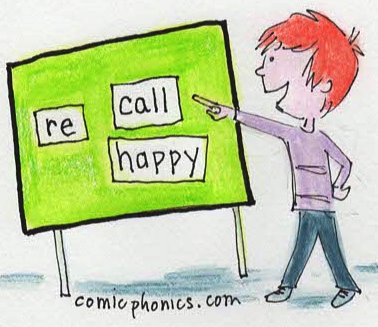
Prefixes usually change the meaning of a word. Un + happy creates “unhappy,” whose meaning is the opposite of “happy.” Re + view creates “review” which means to view again. Suffixes usually change the part of speech of a word, the verb tense of a word or the number of a word. Music +al changes “music,” a noun, to “musical,” an adjective. Jump + ed changes the present tense verb, “jump” to the past tense verb, “jumped.” Girl + s changes the singular, “girl,” to the plural, “girls.”

If children can recognize that a long word has a prefix or a suffix or both, they can segment that word both for pronunciation and for meaning. “Unwinding” can become un + wind + ing. “Un” means not, “wind” means coil and “ing” makes the word an action.

Children should be taught prefixes and suffixes as a separate part of reading instruction. I would start with prefixes only. One way to do this is to make a game of combining prefixes with words, sometimes called roots. (I like to use materials the child can touch, but of course, this work can be done on computer using sites such as ixl.com.) Here’s how:

  • Find a list of commonly used prefixes. Many web sites list about one hundred such prefixes, but I would start with a shorter list of ten or twelve of the most commonly used ones, such as bi (two), dis (the opposite), il (not), im (not) in (not), mis (badly), non (not), pre (before), re (again), sub (under) and un (not).
  • Teach the child what each prefix means, giving her a word to help her remember each one, such as bicycle, disagree, illogical, improper, indirect, mispronounce, nonfat, prepay, resend, submarine, and unhappy.
  • When she knows the meaning of the prefixes, write each prefix on an index card. Write two or three familiar words which could be paired with each prefix. Shuffle both sets of cards separately. Match each prefix with a word which makes sense, and ask the child to read the word and tell what it means.
  • Or, you could choose two root words, one of which can be paired with a given prefix, and help the child determine which root works and why.
  • Later, you could create a list of the words she has created. See if she can segment the words and tell what they mean. If she can’t do some of them, repeat the activity until she can. Gradually remove the words and prefixes she knows and add new prefixes and words until she knows several dozen prefixes.

In a future blog we’ll talk about how to figure out suffixes.  Suffixes are trickier because they sometimes involve changes in spelling the original word.

What does sentence difficulty mean? I’ve read that Lexile scores predict the difficulty of a reading passage based on two things: word difficulty and sentence difficulty.

The number of words per sentence can be a measure of sentence difficulty. Sentences written for beginning readers usually contain a handful of words while sentences written for more proficient readers contain one, two or even three dozen words.

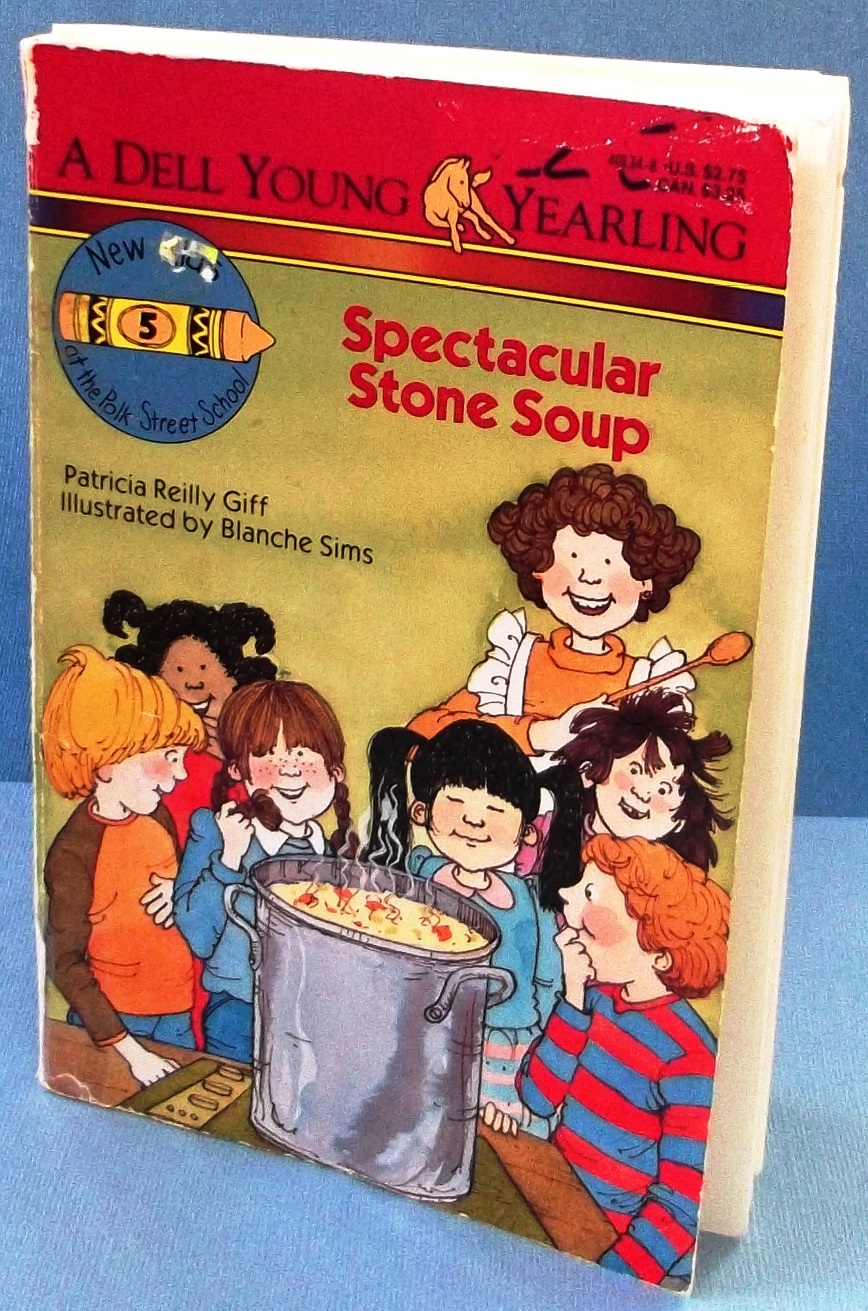
Stone Soup book cover• For example, take the first page of Spectacular Stone Soup, a novel often read in first grade. Here are the first page’s sentences and the number of words in each sentence:

Stacy Arrow hung her jacket on a hook. (8 words) Next to her Jiwon took off her coat. (8 words) Stacy pointed to a sweater on the floor. (8 words) “Whose is that?” (3 words) “No one’s.” (2 words) Jiwon shook her head. (4 words) “It’s been here all year.” (5 words)

• Now compare that novel for beginning readers to a novel for more advanced readers, Harry Potter and the Deathly Hallows.  Here are its first paragraph of two sentences:

Harry Potter book coverThe two men appeared out of nowhere, a few yards apart in the narrow, moonlit lane. (16 words) For a second they stood quite still, wands directed at each other’s chests; then, recognizing each other, they stowed their wands beneath their cloaks and started walking briskly in the same direction. (32 words)

The type of sentence (simple, compound or complex) can be another measure of reading difficulty.

• In the Spectacular Stone Soup selection, each sentence is a simple sentence with one subject and one verb. Some of the sentences have a prepositional phrase; some have adjectives; some have pronouns, but because of the short length of the sentences and the way each sentence limits itself to one idea, comprehension is easy.

• In the Harry Potter selection, the first sentence is a simple sentence but there are two prepositional phrases and an adverb phrase. The second sentence is a complicated compound sentence. Its first clause begins with a prepositional phrase followed by a subject, verb and two adverbs, followed by a noun phrase and a prepositional phrase. Its second clause (after the semicolon) begins with a participle phrase and a subject, but then begins one predicate with a verb, direct object and prepositional phrase and then begins another predicate with a verb, gerund, adverb and prepositional phrase.  Each sentence contains more than one idea.

Word order can be a measure of difficulty.

• In Spectacular Stone Soup, all but one sentence begin with a subject followed by a verb, the usual word order in English. The exception is a sentence which begins with an easy prepositional phrase.

• In the Harry Potter selection, the first sentence begins with a subject and a verb. The second sentence begins with a prepositional phrase, but the second clause in that sentence begins with a participle phrase.

Pronoun antecedents can be a measure of difficulty.

• The Spectacular Stone Soup selection uses the word “it” to refer back to the sweater used two sentences earlier.  It also uses the word “her” to refer back to each girl, but that pronoun is stated in the same sentence as its noun antecedent.

• The Harry Potter selection in the second sentence uses several pronouns (they, their, other’s) to refer back to the noun (men) used at the beginning of the first sentence.  The pronouns are father apart from their noun antecedent.

Parts of speech used can be a measure of difficulty.

• In Spectacular Stone Soup, the words are nouns, verbs, articles, adjectives, adverbs, pronouns and prepositions. Most are one syllable words but a few are two syllables.

• The Harry Potter selection includes the same types of words, but additionally uses a participle used as an adjective and as a gerund. The passage contains a three- and a four-syllable word.

Coupled with word difficulty, sentence difficulty can make reading passages easy or hard to understand. Authors consider their audiences and their reading abilities carefully before deciding how long to make sentences, whether to make sentences quite simple or complicated, whether to use pronouns or to repeat nouns and whether to write sentences in typical subject-verb word order.

As we mature we want more complicated vocabulary and sentence structure to entertain us. In fiction the story comes first, but how much we enjoy the story depends on the crafting of the sentences by the author. In nonfiction, the facts come first, but again, how willing we are to read those facts depends on the skill of the author in using the components of language, including sentence structure.

My third grader skips over long words when she reads aloud. When I ask her to pronounce them, sometimes she can if she segments them, but many times she can’t. How can I help her?

Lots of children do this, thinking they can gain enough meaning from the rest of the words. And sometimes they can. But usually this is a sign of a struggling reader.

Your daughter needs to learn strategies to figure out new words.

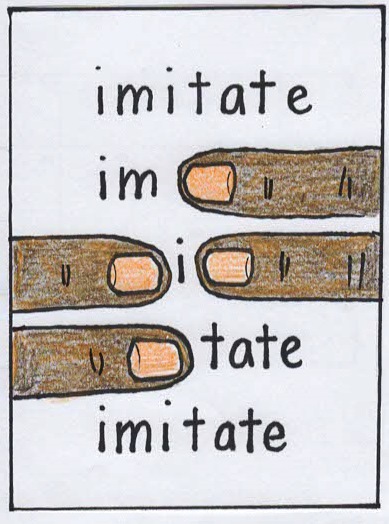
fingers covering parts of word, then revealing themWhen she reads aloud to you and encounters a word she skips, stop her and cover parts of the word to help her figure it out in small chunks. For example, in a word like “imitate,” cover over all but the “im” part. Ask her to pronounce “im.” Then ask her what a short i sounds like. Show her the “i” in the middle of the word and ask her to put those sounds together. Then show her the “tate” which should be easy to pronounce. Now reveal the word bit by bit as the child says it. You say it too to be sure she hears it pronounced correctly.

But she still might not know what the word means. Help her to understand it. Use it in a couple of sentences. My experience working with children is that many times they can remember the meaning of words, but they cannot use them properly in sentences. Ask her to create her own sentence using the word.

I would make a list of words she has learned this way, and later in the day or the next day, go back to them. Ask her to read the words and tell you what they mean. Return to these words from time to time to reinforce them.

I would also try to find ways to use the words in your everyday conversations with your daughter.

Perhaps your daughter needs more phonics education. You could quickly go over CVC rules of adding suffixes. You could instruct her about prefixes and what they mean and rules for adding them to root words.

Letting your child slide over long, unfamiliar words sets up a bad habit. Eventually, when she gets into middle school classes, she’ll encounter such words routinely and will need strategies to figure them out. Talk to her teacher about the situation. Perhaps there is a reading specialist in your school who could come to her classroom from time to time and help the students decode longer words.

And I will provide more information about how to decode longer words in upcoming blogs. Keep tuned.

When my first grader reads aloud he plows right through periods as if they don’t exist. When I ask him about what he just read, he has only a vague idea. How do I help him?

It sounds like your son might be having a fluency problem. Fluency is one of the four components of reading and involves three skills:

  • Accuracy—decoding the words to pronounce each one correctly.
  • Speed—reading at a pace which is fast enough to connect words into ideas.
  • Prosody—reading with expression so that the words and sentences sound meaningful.

Assuring he can pronounce most written words properly is the first step. Since you don’t mention pronunciation problems, I assume he can decode just fine.

dhild running with book in handsSpeed is the next consideration. Is he reading at a normal reading pace—not too slowly because he is stumbling over pronunciation, and not too fast because he is racing? From your question, I assume he might be racing and jumbling too many words together to understand them. Insist that he stop at a comma and a period, and if he forgets, stop him and ask him to reread the sentence. Then ask him what it means.

Lastly, listen for the way he reads. Does he raise his voice at the end of a question? Does he change the tone of his voice when the big bad wolf is talking? Does he say some words louder and some words softer to show he understands the meaning behind the words? If he is not doing this, he will have a more difficult time figuring out the meaning because he is leaving out emotion.

One key for you to know that your child is comprehending what he is reading is his use of inflection, that is, altering his voice in tone or pitch. Children who plow through sentences don’t inflect. They are reading too fast to decode and to inflect at the same time.

When a child first learns to read, accuracy is most important. But it sounds like your child is beyond this stage of decoding, at least with the kind of books he is reading.

How can you help him?

  • Make sure your child is reading books just slightly beyond his level of reading, not books too advanced for him.  Does he understand the vocabulary he is reading?  Does he understand the topics?  If not, comprehension will go down.
  • Consider reading aloud to him more, modeling inflection. Just because he can read alone is no reason why you should stop reading aloud to him. He still has so much more to learn about reading—vocabulary, for example, and making conversation sound real.
  • Is he allowed to stop reading when he has finished a certain number of pages? If so, he might be racing in order to end his reading session early. Change your strategy.  Ask him to read a certain amount of time no matter how many pages he reads.
  • Let him know he is going to need to explain what he has read when he is done, and if he can’t explain it, he is going to need to reread it with you. Needing to explain or redo will force him to slow down.

Another possibility is that your child is a high functioning autistic person.  People with autism can have high intelligence, but emotions baffle them.  Because they cannot “decode” emotions in their everyday lives, they cannot “decode” emotions in books, so stopping for punctuation might add no meaning to what they read.  If your child is autistic, early intervention can help.  Contact your school counselor or your pediatrician for an evaluation.

But from what you have said, I suspect your son is in a hurry and needs to learn that speed reading without understanding is a waste of his time.

My child is almost four. She wants to learn to read. Where do I begin? Or does it matter?

It matters, according to research. You should start with teaching her “the code,” that is, the connection between the sounds of the English language and the letter symbols we use to mean those sounds. Here’s how. (Look for more information on all these ideas in previously published blogs at comicphonics.com.)

  • children moving letter tilesFirst, make sure she can pronounce all 42 sounds of English. Listen to how she pronounces everyday words and make sure she is saying the sounds correctly. Help her with pronunciation.
  • Then connect sounds with letter symbols, a few at a time. Start with the beginning sounds of a few key words such as the child’s name, m for mom, d for dad, b for baby. Help her to hear those sounds in the beginnings of other words. For example, if you are pouring her milk, ask her what sound milk begins with. Then show her an “m” and explain that is how we show that sound.
  • Beginning sounds are always the easiest to hear, so focus on them.
  • Help her to write the initial of her name and a few other meaningful letters.
  • child on floor reading picture bookSince each vowel has many sounds, teach her to associate each vowel with a word and an image that begins with a “short” vowel sound such as apple, egg, igloo, octopus and umbrella. Later, she can compare the vowel sounds in new words to those vowel sounds.
  • In speaking, start putting letter sounds together to form one-syllable short-vowel (CVC) words she knows, like “cat” and “dog.” When she can hear how words are formed (phonics) by combining sounds, use letter tiles to show her what the combining of sounds in words looks like using letter symbols.
  • When you are reading stories to her, point out words she might be able to decipher, and help her to sound them out.
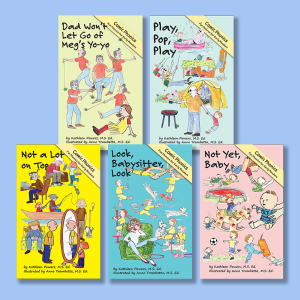
  • When she knows most of her sound – letter matches, she is ready to start reading books which use one-syllable, short-vowel words. Unfortunately, few good ones exist. We at comicphonics.com have written five humorous books for new readers. (See the links to the right of this blog.) Your librarian can point out where other books are shelved, but many labeled “first” readers contain difficult words. Margaret Hillert has written some good beginning books, and so has Dr. Seuss. Good illustrations can help the child figure out the meanings of difficult words, but she will probably need your help as she begins.

Figuring out the code of written English is how a child begins to learn to read. There are lots of commercial methods to do this, but the best I have found is the Explode the Code series. Children find its combination of goofy pictures and sequenced phonics instruction fun.

Later you can focus on other aspects of reading including fluency and comprehension. But the place to begin is demystifying the code by connecting the sounds of our speech to individual letters and pairs of letters, and then combining them to form words.

My kindergartener wants to read chapter books. What features should I be looking for so she doesn’t get discouraged?

Congratulations! Some early readers are ready for chapter books, but that doesn’t mean all chapter books are right for them. Here’s what you should be looking for.

  • Characters whom the child relates to and cares about are really important. That means child characters, ones the same age or just a bit older than the reader, or characters who behave in child-like ways, such as Toad in the Frog and Toad series. The characters in books for young readers must be encountering situations that the reader can relate to—like Junie B. Jones fearing to take the school bus, or of Nate the Great visiting his friends’ houses in search of a lost cat.
  • girl reading Junie B. JonesCharacters should be different from one another—their names, gender, and personalities. Junie B.’s friend, Lucille, is prissy and wears pretty dresses while her classmate, May, is a tattletale. Frog’s friend, Toad is a short, brown scared follower while Frog is a taller, green, organized leader.
  • If the chapter book is part of a series, familiar characters or activities should appear. Children delight in recognizing these patterns. They know that when reading Nate the Great stories, for example, Nate always takes a break to eat pancakes. His friend, Rosamond, always appears with her four black cats. Nate’s dog, Sludge, helps him solve crimes, while another dog, Fang, always makes an appearance.
  • Asian girl reading book Plots should be straightforward with no flashbacks or complicated subplots. If the story concerns finding one of Rosamond’s cats, then that becomes the whole focus of the story. Good books remind children what they have learned. A character like Nate might think about the clues he’s uncovered, and a list of them might appear as an illustration. The plots are shallow and move quickly through a series of events.
  • Good chapter books for young readers should contain illustrations. A page of text will appear harder to read than a page with a line drawing on it. The drawings should provide additional information that the text might not dwell on. For example, drawings of Junie B. show her with fly-away hair and one sock up, one sock down, telling us in pictures about her personality. Illustrations don’t need to appear on every page, but more illustrations make the book appear easier to read.  Also, illustrations lengthen the number of pages, so the child thinks she is reading more than she actually is.
  • girl looking at book displayPicture books are printed with large type, but chapter books have reduced size type. To offset this change, good chapter books for young readers will increase the space between the lines of type and increase white space by making margins larger. This makes the text easier to read and the page “friendlier.” Good children’s books use dialog too. Dialog is usually short, so more white space surrounds it. Hyphenations will not be used at the ends of lines to split words, and sentences will end on the bottom of a page rather than being carried forward to the next page.
  • Discouraged child thinks there are too many words in a book she is readingThe vocabulary of chapter books for young readers should be easy enough to read so that the child can read for enjoyment, without help. New words can be introduced, but in context, and should be repeated during the story so the child can master them.
  • Sentence structure should be normal, that is, subjects followed by predicates. When complex sentences are used, the dependent clause should come second. That is the way children speak and write, so that pattern will be easy to understand. Sentences should be shorter than adults would expect. Not all sentences need to be short, but longer sentences should make sense on the first read through.

Right now I am working with a second grader who is reading his first chapter book, Charlotte’s Web. It was assigned by his teacher. Some of the characters’ names are similar (Avery, and Mr. Arable, for example). The vocabulary is advanced. The pig is called “radiant”; he is put into a “crate”; he is watched by “goslings.” For a suburban child, these words are mysterious. The sentence structure is too sophisticated. Even though Charlotte’s Web is an excellent novel, it is not an appropriate first chapter book for my student. He is not ready to read it without help.

In my public library, chapter books for elementary school aged students are grouped together. Within those books, some are labeled on the spine, “First chap.” Those books are perfect for children reading their first chapter books. Or if you are lucky enough to have a children’s librarian, ask her what books she would suggest. Or phone or visit your school librarian and ask her for help.

Hundreds of wonderful books are appropriate for your kindergartener. Good luck!