
If your beginning reader is enamored with all things technology, let me highly recommend a colorful animated series which teaches basic phonics.

Alphablocks is a step-by-step reading program created by British literacy experts and award-winning web designers. The “stars” consist of 26 colorful letter blocks with distinctive faces who jump, twirl, sing, and dance to form words like “hen” and “tub.”
The series is divided into five levels. Level 1 teaches young viewers to recognize sounds associated with the most commonly used letters, creating short-vowel, one-syllable words. Level 2 introduces the rest of the alphabet. Level 3 teaches about “letter teams” or digraphs. Level 4 teaches blends. Level 5 introduces long vowels formed with “Magic E.”
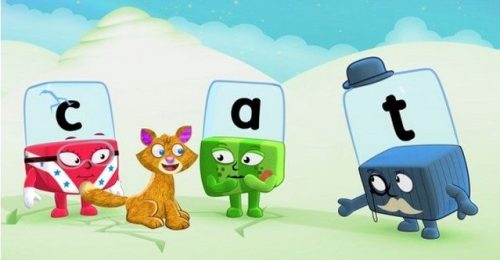
Segments last about four or five minutes. The innocent letter blocks find themselves in silly situations as they hunt for other letter blocks to help them form words.
I watched with my five-year-old grandson who read aloud the words as they formed onscreen. Even his three-year-old brother was engaged. At one point I said, “Now I wonder what letter that is?” as a letter skipped across the TV screen. “L,” shouted the three-year-old. He was right.
We watched on Netflix, but Alphablocks is also available through YouTube, and apps can be downloaded free. A companion series on numbers is also available for preschoolers and primary grade students.
For more information, go to https://wwwlearningblocks.tv.
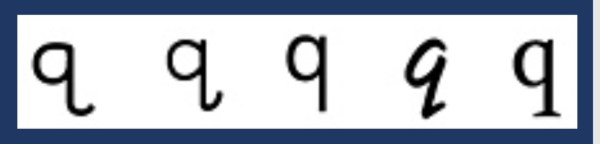 is confusing, changing its appearance depending on the typeface used. It can be made with a straight descending line only, a straight descending line with a forward slash attached to it, or a straight descending line with a forward curve attached to it. And then there are serifs, which add another visual element.
 My grandson, a kindergartener, has completed almost three weeks of home education, using teacher instructions or working at online sites. The results have been mixed.

 Weak word recognition skills is the mostly likely cause, and because of that, students guess at words or search for clues from pictures and other words.
 The word “it,” for example, has two sounds, each of which is associated with a letter. The word “shop” has three sounds with “sh” corresponding to a single sound.
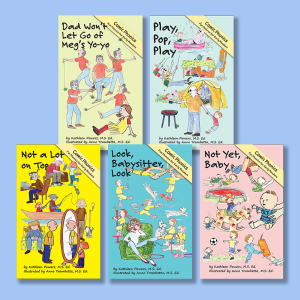


 comicphonics for early readers