Why Funny Pages?

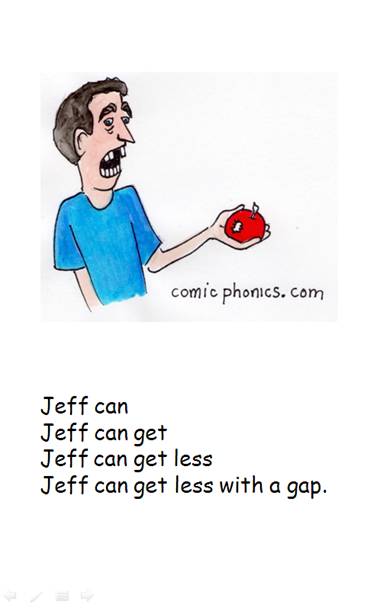
Man with front tooth gap trying to eat an apple.

To download 17 new Funny Pages go to Book Apps and Funny Pages.

You might notice that most of our blogs focus on how to apply educational theory to teaching your child to read.

But you might be thinking that our Funny Pages are just that—funny pages.  In fact, they too apply educational theory to learning how to read.

  • Kids love humor.  Our Funny Pages begin with humorous situations—a cat wearing a baseball cap and holding a bat, or a man running inside a can.  Even if the child can’t read, he can enjoy looking at the silly pictures.  We think of the silly pictures as our “Gotch-ya!” moment with the child.
  • Our reading words are almost all one-syllable, short-vowel, CVC words.  Nearly every method of teaching reading begins with these kinds of words because they are the easiest to grasp.
  • Most of our Funny Pages begin with just one or two words (usually the subject) and build onto those words with another word or two, and then another, and another.  The first line is repeated in the second line and then added to.  For example:
    • John can.
    • John can go.
    • John can go up.
    • John can go up a hill.

By repeating words, there is less new information on each line, so the child can rely on what he has already learned and build on that.Dog jumps up on a child's bed.

  • White space around words makes them look “friendlier” and less intimidating.  So even though the first lines in most of our Funny Pages might have only one or two words, that white space after those words serves a powerful reading function:  to relax the child and encourage her to read.
  • We notice that so much beginning reading material is not “literature.”  It uses easy-to-read CVC words, yes, but the words have little meaning because the grouping of words makes little sense.  Sentences like “A cat bats a fat hat at Pat on a mat,” leave the child wondering what that sentence means.  The words contrive to tell a story, but the child has to work hard to understand.  We start not with the words but with the story—the silly art that lures children into the words because the art work is so funny.  Then we add words to describe what is happening.
  • Telling a story about wax in ears can be frustrating if we don’t use the word “ear.”  Or telling a story about a girl falling down a hill can be daunting if we don’t use the words “fall” or “down.” But we have chosen to gear our Funny Pages to beginning readers, and to stick to simple CVC words that they can sound out successfully.

Do you have a beginning reader?  We welcome your feedback on how they respond to our Funny Pages.  We also welcome your child’s idea of a silly story for Mrs. A to illustrate.  How would your little girl or boy like to see “Submitted by” and her or his first name on one of our funny pages?  Send us your children’s ideas.
Is a child’s vocabulary destiny?

Consider this:

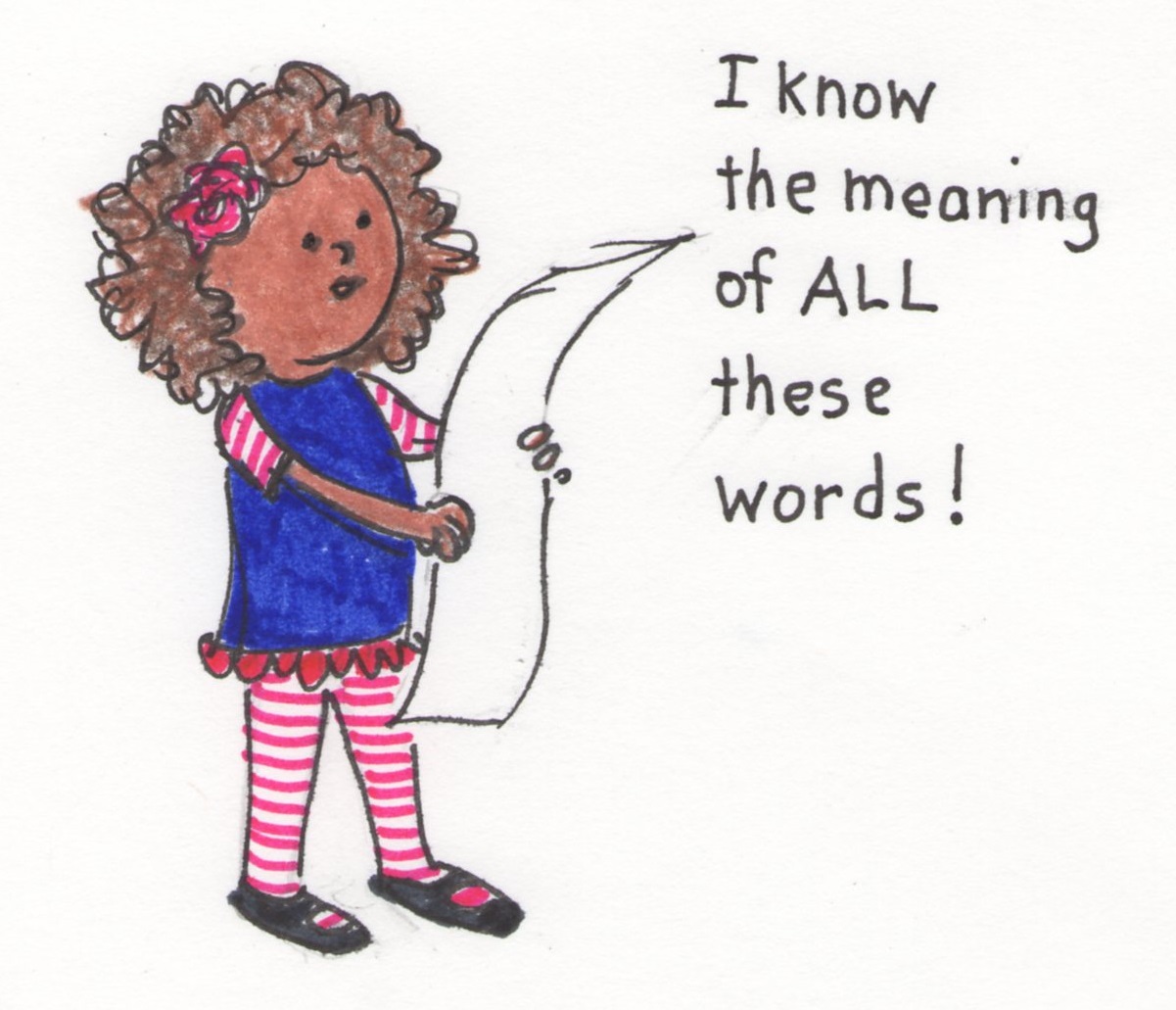
  • Three-year-old children from professional families already have bigger English vocabularies than parents in lowGirl is looking at a list of words she can read.-income families.
  • Children from professional families hear 300 more spoken English words in an hour than children of parents on welfare.
  • By the time children are four-years-old, children of professional parents will have heard 32 million more words than children from poor families.

What does this research by Betty Hart and Todd R. Risley (1980’s and 1990’s) mean?  Combined with more recent research that shows that vocabulary acquisition is the single greatest predictor of reading success, it means that children of professional parents are far ahead of children from low income families as they start preschool.  Other studies show that as a child moves through school, this vocabulary gap increases, directly correlating to a child’s achievement in reading comprehension.

So what can you do with your preschooler, primary grade child, or ESL learnerto increase his vocabulary?  Quite a bit.

A young girl uses the word odiferous to describe a stinky diaper.

  • Use “big” words when you talk to your child.  Provide a rich vocabulary for your child to hear.  “Baby” words are no easier to learn than adult words, so use adult vocabulary with your child.  For example, when I was a child, my father used to come home from work and ask us children, “Is everything copacetic?”  Of course, we didn’t know what he meant, but he explained, and within a short time we were asking one another the same thing.
  • Define new words when you know your child doesn’t understand.  Give an example you can refer to again and again.  Try to give an image to keep in mind if you can.  “Shutters are those door-like things on the sides of house windows, remember?”
  • Choose new words that sound somewhat similar to words the child already knows.  For example, a child knows what a computer is, but “compute” would probably be a new word.  Make the connection to how the computer can add up numbers quickly to help the child remember what compute means.
  • Encourage your child to ask you what a word means.  Don’t laugh at him because he doesn’t know.  We all learn by asking questions, so questioning is a great skill to help your child to develop.
  • Repeat new words often until the child understands.  One or two times is not usually enough.  Try six or ten uses of the word in a few days to cement the word into the child’s memory.
  • Read, read, read to children to expose them to new words.  Nursery rhymes contain old-fashioned words the child might not know.  Emails from Grandma might too.  Read from a variety of genres, but pick topics of interest to the child, so she will pay attention.  Choose books that stretch the child’s vocabulary with new words in context, but not too many.
  • When you are reading to your child, and you come to a new word, read it in context, and then ask the child what she thinks it means.  Try to find something right in her answer, even if it’s, “Well, that was a thoughtful explanation.  Well done.  Now let me explain what the word really means.”
  • Read the same book to a child several times, helping the child to conquer the words in context.  If there are many new words, don’t discuss each one.  Pick a few so the child focuses on enjoying the book.
  • Set yourself a goal of a word a day for a preschooler.  Keep a list on the refrigerator to remind you to use past words again to help with retention.  Let the child see the list growing.  As we measure the height of our children, they feel pride.  As we measure their learning, they will bask in that success, too.

How about you?  Have you come up with any ideas to help improve your child’s vocabulary?  Share your ideas by commenting on this blog.

Mrs. K and Mrs A publish another beginning reading book

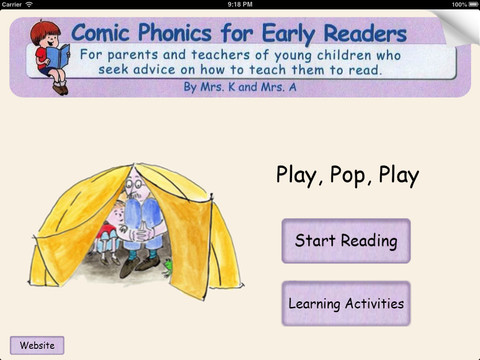
Mrs. K and Mrs. A have published our third children’s book app in three months!  Play, Pop, Play, our latest book app, resembles our prior book apps, Not a Lot on Top and Look, Babysitter, Look.  All three are written in easy CVC words for beginning English and ESL readers and have hilarious drawings featuring a little kid to attract young readers.

Play, Pop, Play iTunes App

Go to http://goo.gl/JMrT3 for more information.

In Play, Pop, Play, little Tom wants his Pop to play with him—tucked under a table, splashing in a tiny swimming pool, and pumping high on swings.  Pop tires out and wants to nap, but Tom keeps going until—well, you’ll have to read to find out.

Several activity pages follow, all using the simple vocabulary and events of the story.  Unlike paper workbook pages, these app pages are interactive, encouraging the beginning reader to draw lines with electronic crayons, swipe words in a word search, and number the story events in sequence—appropriate reading skills for new readers.  Then—poosh!—the child can erase and start over, or save, or email her work to Grandma.

Play, Pop, Play is available for $1.99 on Apple iPhones, iPads and iPods.  To preview or to buy this book, go to http://goo.gl/JMrT3.

Also, check out Not a Lot on Top at http://goo.gl/ClVyM, and Look Babysitter, Look at http://goo.gl/K1HcU.

Mrs. K and Mrs. K and Mrs. A publish second beginning reader book app: “Look, Babysitter, Look”

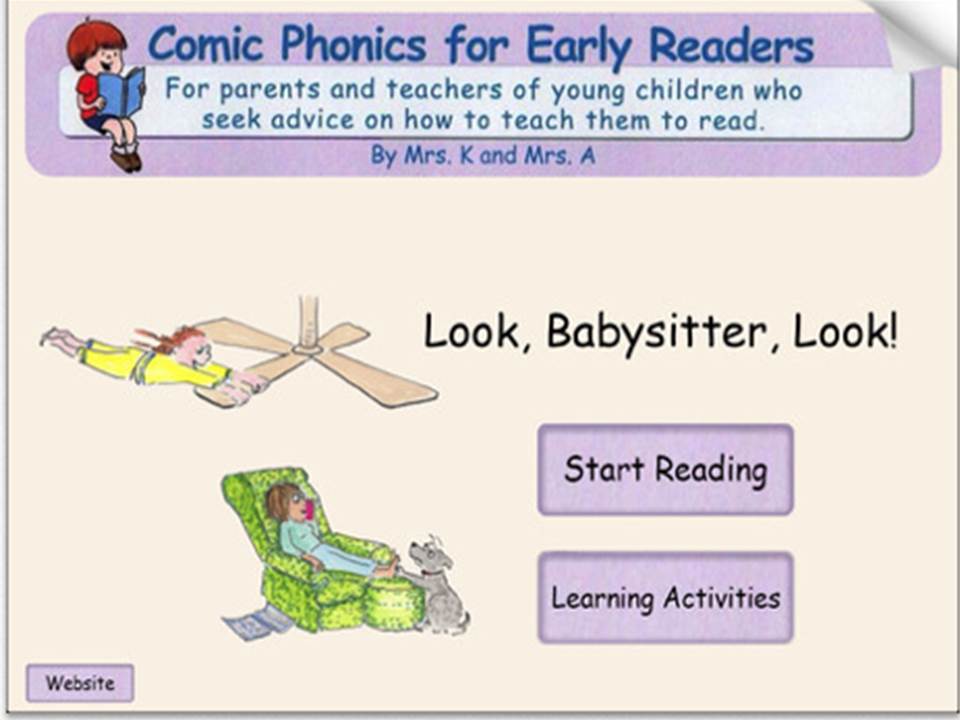
Mrs. K and Mrs. A have published our second children’s book app for beginning English readers and beginning ESL readers, Look, Babysitter, Look.

Book app for iPhone and iPad.

Available for iPhone and iPad at http://goo.gl/K1HcU

The story of Look Babysitter Look follows the antics of a little girl who cannot sleep while her clueless babysitter talks on the cell phone.  The pictures are funny, the words are easy and the cost low–$1.99 for the book and activity pages.  The book was designed as a fun method to attract beginning readers using phonics—mostly short-vowel, one-syllable (CVC) words.

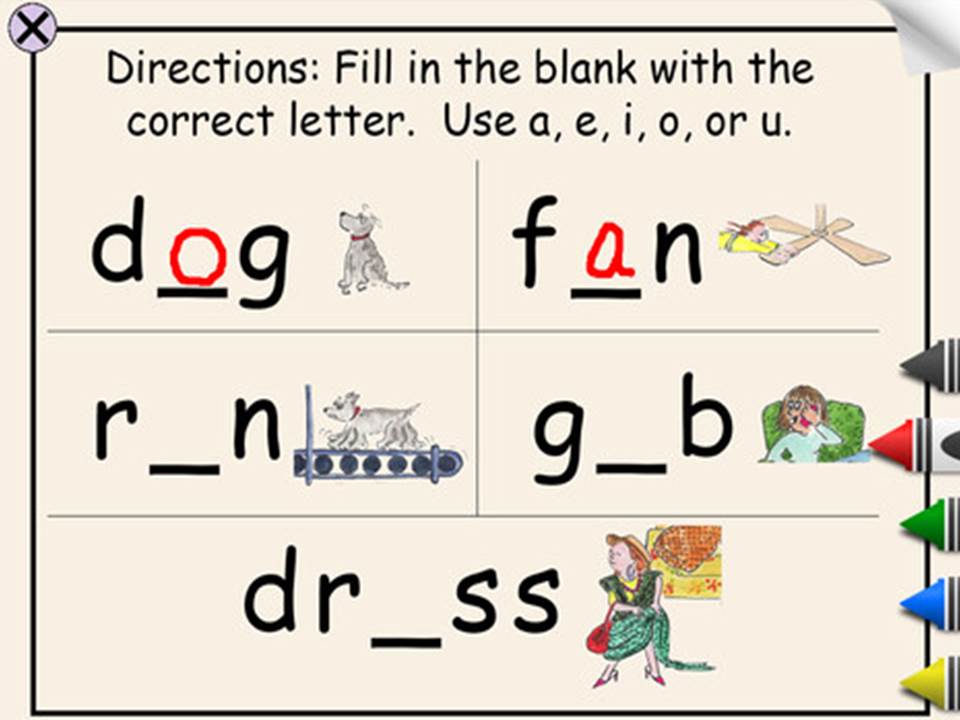
Look  babysitter look sample activity page.The activity pages resemble workbook pages except that they are interactive, which delights kids.  A child can write a letter in a blank with an electronic crayon, circle words in a word search, fill in simple crossword puzzle words or draw lines to match drawings that rhyme.  All the activities are appropriate for a beginning reader and pertain to Look, Babysitter, Look’s characters and theme.

Right now Look, Babysitter, Look is available on Apple products through iTunes books but we expect it will be available on android products.  To preview the book, or to buy it, click on http://goo.gl/K1HcU.

Also, check out our first book, Not a Lot on Top, at http://goo.gl/ClVyM.

What are Dolch words? Are they the same as sight words?

Yes, Dolch words are the same as sight words.  Many teachers expect beginning readers to recognize these words by the end of first grade.

Child looking at flash cards of two and three letter words.

Click on the picture to enlarge it.

The list of 220 Dolch words was compiled by Edward W. Dolch, Ph. D. in 1936 and published in his book Problems in Reading in 1948.  Dolch listed the most commonly used words in children’s books available in the 1930’s.  He then divided them into six parts:  pre-primer, primer, Grade 1, Grade 2, Grade 3 and nouns.

Dolch thought that if a child could read the words on his list, then that child could read fluently.  Even though many of the words on the list are pronounced according to the rules of phonics, some are not and do need to be memorized.  This is why the list is sometimes called sight words.  Many kindergarten and first grade classrooms have these words posted to the walls or have flash cards of these words.

Online you can find free copies of the list by searching for “Dolch words.”  You can also find flash cards, interactive sentences which pronounce the words for a child and spelling tests based on these words.

Few story books use just the Dolch words.  Dr. Seuss in writing The Cat in the Hat, tried but found it impossible.  However, he used just 236 words, many from the Dolch list.

Take a quiz on information from our past blogs and test your understanding of teaching reading to little kids.

Click on photos to enlarge them
Answers are at the bottom of the blog

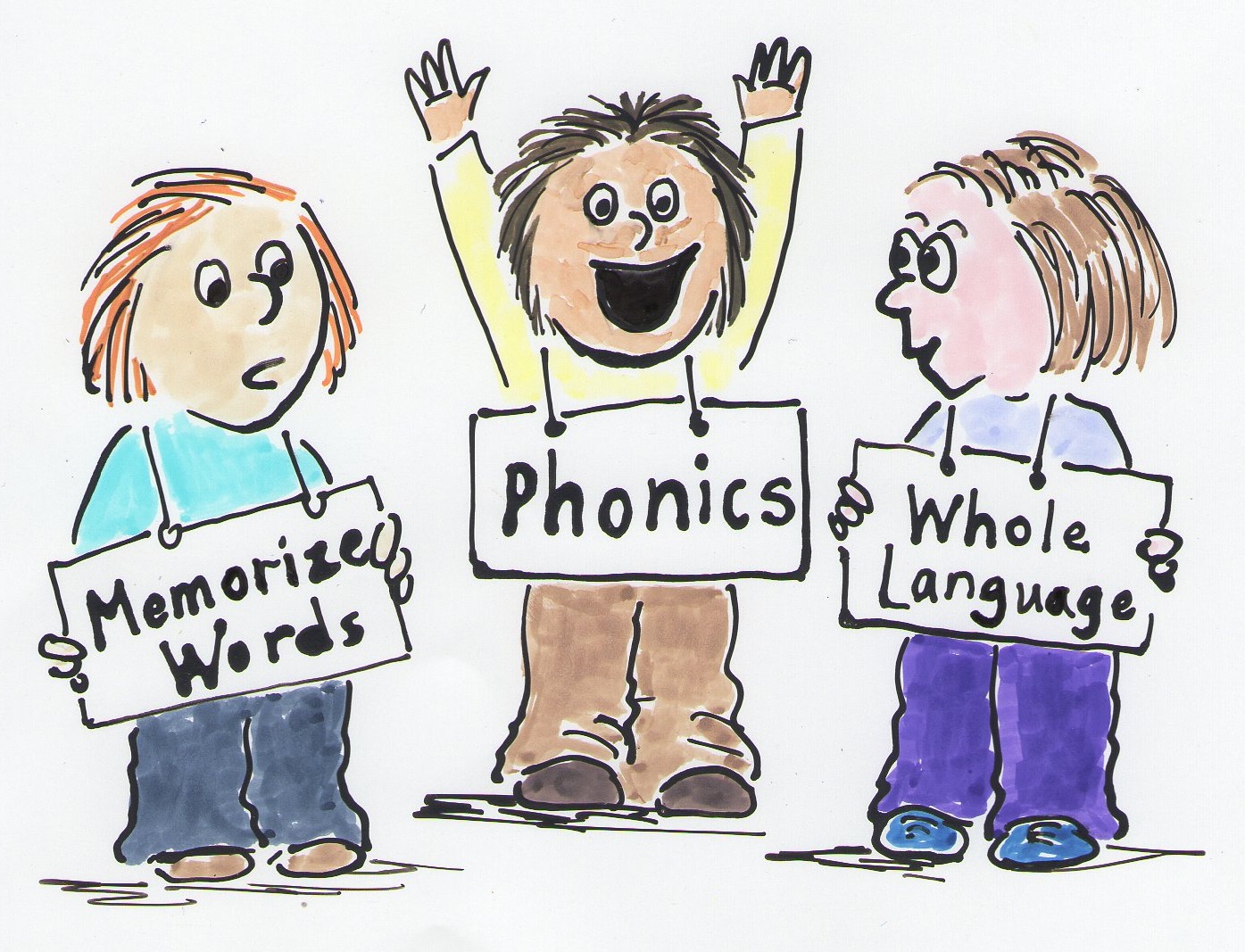
Three children with signs around their necks that read: Meniruze words, Phonics, Whole Language1. Research shows that the best way to teach preschoolers to read is with:
a.
systematic phonics   b. whole language  c. sight words

Child seeing letter on dog's collar2. What are the easiest letter sounds to teach a beginning reader?
a.
short vowels  b. long vowels
c. particular consonants

young girl with pencil in mouth3. Does it matter how a child holds a pencil?
a.
No, as long as the printing is legible.  b. Yes, the tripod method is best (thumb, index finger, middle finger).  c. No, unless the grip produces cramping, fatigue or pain.

Lower case b and d are large eyes , seeing each other "eye to eye."4. Is there an easy way to teach a child to distinguish “b” from “d”?
a.
Yes, by forming a “bed” with both fists.  b. No, but eventually everyone figures it out.  c. No, but only kids with dyslexia have trouble after first grade.

Chart of 4 reading components

5. Is English a harder language to read than other Western languages?
a.
No, it just seems that way because English has so many words.  b. Yes, the multi-letter structure of syllables makes English more difficult.  c. Yes, the multiple ways of spelling the same sound make English more difficult.

Boy telling mother information from a book about turtles

6. Do preschool boys prefer different reading material from preschool girls?
a.
No, at that age their preferences are pretty similar.  b. Yes, preschool boys prefer more nonfiction and adventure stories.

Simon Says touch your tummy7. What games are especially good for getting preschoolers ready to read?
a.
Ball games of all kinds  b. “Mother, May I” and “Simon Says”  c. Running

Plow horse crisscrossing a field, left and then right and then left again.

8. Why do we read from left to right in English?
a. The Greeks did it, and then the Romans did it, and so now we do it.  b. Right-handed scribes didn’t smudge going from left to right.  c. Right-handed people could see what they just wrote by going from left to right.

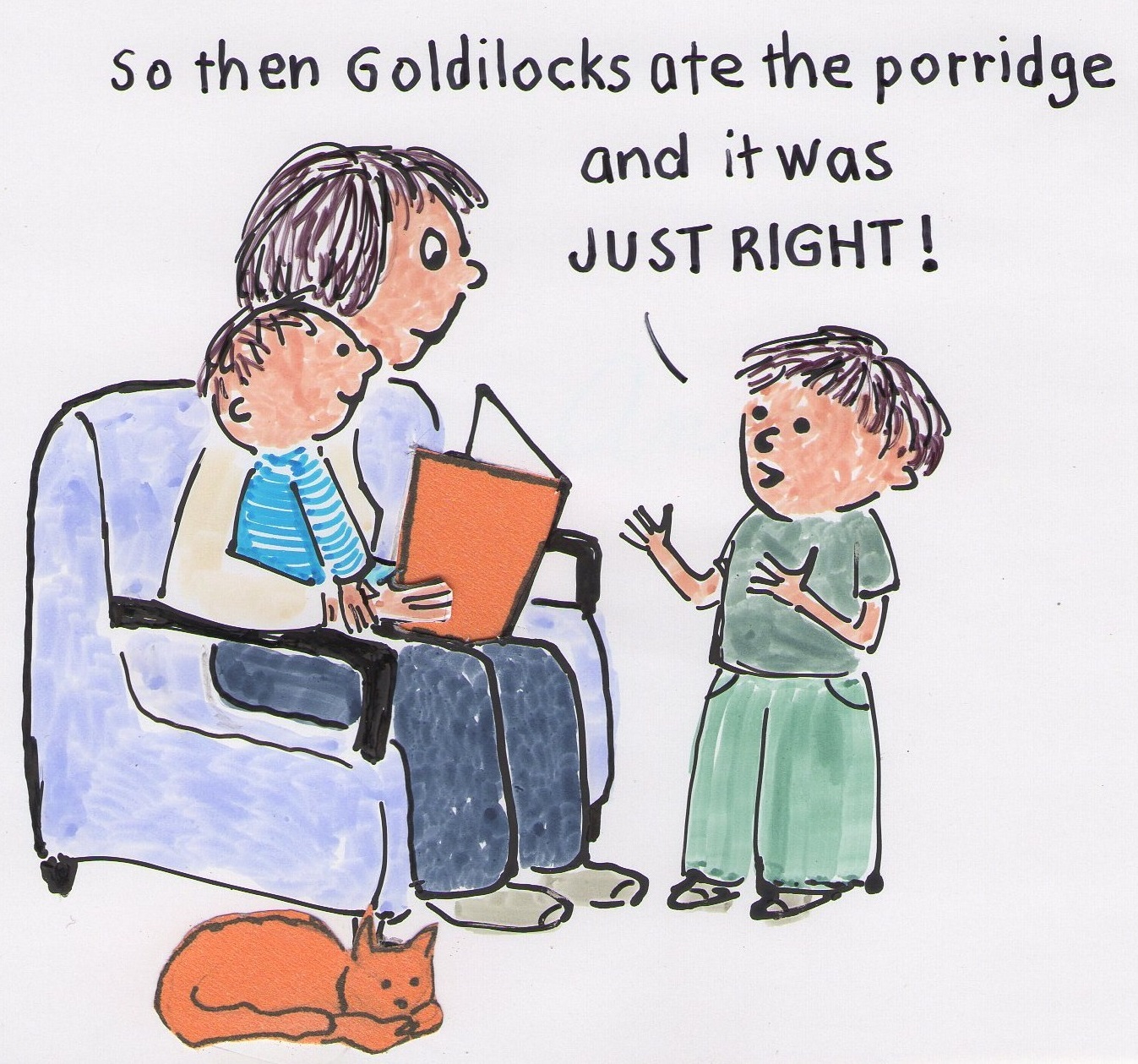
child retelling story of Goldilocks

9. What do schools expect kindergarteners to know about reading?
a.
Rhyming words are the same at the end, not the beginning.
b. There are two kinds of vowel sounds:  long and short.  c. How to identify 26 upper and lower case letters

Dyslexia Warning Signs by Age10. Are there more dyslexic readers in English than in other languages?
a.
Yes.  English is harder than most languages to decode.  b. No, but in the U.S. children are tested more for disabilities.  c. Yes, dyslexia is somewhat culturally induced.

Answers to Quiz on knowledge of reading and preschoolers.

1. Research shows that the best way to teach preschoolers to read is with systematic phonics.  The US government ended the debate with a large study about ten years ago.  See blog.

2. What are the easiest letter sounds to teach a beginning reader?  Particular consonants which almost always sound the same are the easiest way to start.  See blog.

3. Does it matter how a child holds a pencil?  Experts say the tripod method leads to less cramping, fatigue and pain.  See blog.

4. Is there an easy way to teach a child to distinguish “b” from “d”?  Forming a “bed” with both fists works once a child knows how to spell bed.  See blog.

5. Is English a harder language to read than other Western languages?  Yes, the multi-letter structure of syllables and the multiple ways of spelling the same sound make English more difficult.  See blog.

6. Do preschool boys prefer different reading material from preschool girls?  Yes, preschool boys prefer more nonfiction and adventure stories compared to girls.  See blog.

7. What games are especially good for getting preschoolers ready to read?  “Mother, May I,” “Simon Says” and games requiring listening and following directions are good.  See blog.

8Why do we read from left to right in English?  No one knows, but there are lots of theories.  See blog.

9. What do schools expect kindergarteners to know about reading?  Rhyming words, short and long vowels, and all the letters and their sounds are on the short list.  See blog.

10. Are there more dyslexic readers in English than in other languages?  Yes, English is harder than most languages to decode, in part because English spelling has not kept up with English pronunciation and because of the multiple ways of pronouncing almost all letters.  See blog.

How can I teach my child vowel sounds?

I have followed a low tech system somewhat similar to teaching consonant sounds, but a system that is a little different too.  This phonetic approach works well with ESL students, young native English speakers getting ready to read and even adults because it makes learning fun.

Looking "over the shoulder" of a young girl sorting pictures of things that have a short A sound when spoken.

To enlarge, click on the picture.

  • I make a set of a dozen or more picture cards for ă:  apple, astronaut, alligator and ax (which begin with ă sound), and other CVC words using ă such as hat, man, dad and bag.
  • I also make one card with ă written on it.
  • At the same time, I make picture (flash) cards with pictures for the other short vowels, and I take some of those cards and temporarily add them to the ă deck.
  • Knowing that discerning vowel sounds is hard, I put the apple card next to the ă card and say the word apple many times, focusing on the vowel sound.  Slowly I help the child say the words in the deck of cards and place the cards near the ă card or in a discard area.
  • When the ă sound is learned (usually this takes several sessions), I take ĕ, ĭ, ŏ and ŭ words, and one short vowel at a time, go through the process with each sound.  Because ĕ and ĭ are hard to distinguish, I do them after ă, ŏ and ŭ, and spend more time on them.
  • Then I start mixing up two of the sounds, such as ă and ŏ.  I put both the ă and ŏ cards on the table, and take the picture cards for only those two sounds, shuffle them, and go through them with the child.  Once the child can distinguish those sounds, I gradually add ŭ to the mix and have the child sort ă, ŏ and ŭ.
  • I leave ĕ and ĭ to last and do those two letters together before I include them with the other short vowel sounds.  It takes many weeks of practice to distinguish ĕ and ĭ sounds.  When the child has mastered them, I add the other three vowels to the deck and the child sorts all five short vowel sounds.
  • When the child has mastered all five short vowel sounds, I go through the same process with ā, ē, ī, ō and ū.  The process for the long vowels goes quicker than for the short vowels.
  • As I move on teaching the child other sounds, I review the vowel sounds if I notice the child is forgetting some of the sounds or mixing up any of them.  This happens with every child I have taught.

Preschoolers and primary school children like this method of learning because they are learning through a game.  They like the control they have—holding the cards and placing them.  They like working one on one with an adult tutor who is paying special attention to them.  Sometimes I do one card and the child does one card to emphasize the fun of learning.  No worksheets, no writing—just fun.  Yet children learn their letter sounds.

Is there a low tech, inexpensive way to teach my children their letter sounds?

I’ve had success teaching reading to brand new readers by matching pictures to the correct letter using homemade flashcards.  Both native English speakers and ESL preschoolers have found this a fun way to learn letter sounds.  It can be done in five minutes here and there, making it a good way to teach children with short attention spans.

Child sorting picture flash cards to match with the letter B.

To enlarge the picture, click on it.

I suggest you try this method:

  • Cut some index cards in two, each about 3 by 2 ½ inches.  Or use the index cards whole if you prefer.
  • On ten or twelve blank cards, paste pictures of words which begin with the same consonant sound, such as the letter “b.”  Use pictures of a ball, a balloon, a bear, a banana, a ballerina and others until you have about ten to twelve cards with “b” pictures.
  • On another ten or twelve blank cards, paste pictures of words which begin with other letters, such as an apple, a cat, a dog, a kite and a piano until you have about the same number of cards as “b” cards.
  • On one blank card write or paste a capital B and a lower case b, “Bb.”
  • Lay the card labeled “Bb” on a table.  Shuffle all the picture cards, or let your child do that.  The more she can participate in the process, and eventually control it, the more likely she is to be eager to play the “game.”
  • Now taking one card at a time, have your child say the word of the picture.  Emphasize the “b” sound for her, and ask her if the card starts with a “b” sound.  If so, tell her to put the card next to the “Bb” card.  If not, tell her to put the card a little distance away.
  • Keep doing this until you have gone through all the cards and made two piles of picture cards.
  • With practice, your child will be able to match the words to the letter quickly.
  • After she has mastered “Bb,” make a set of cards using another consonant sound.  You can keep the same set of random cards or add to them.  Some of the random cards will eventually become the letter cards, so you need to add to that group of cards as you develop more letter cards.
  • Begin with the 16 consonants which almost always sound the same:  (Bb, Dd, Ff, Hh, Jj, Kk, Ll, Mm, Nn, Pp, Qq, Rr, Tt, Vv, Xx and Zz).  You don’t want to  do the ABC’s in order, starting with Aa.  Begin with any of the consonants I just listed.  If the child’s name is Tom, start with “Tt.”  If it is Hannah, start with “Hh.”
  • Try not to use pictures of words that start with blended sounds.  For example, don’t use “blue” or “braids” yet.  Later, after the child is sure of the single sound of a letter, you can start combining letter sounds.
  • Don’t start with a consonant that has multiple sounds, such as Gg, Ss or Cc.  For starts, choose letters and words that follow the rules of phonics.  Try to reduce confusion as much as possible.
  • Also, don’t start with vowels.  I teach vowels slightly differently.  I’ll tell you about that in my next blog.

Perhaps this sounds like too much work?  I use the cards over and over with new reading students, so for me the time it took to make the cards was well worth it.  If you have more than one child, you too can reuse the cards, and if you laminate them, they last forever.  (Laminating is expensive, but clear packing tape protects the cards well.)  And the cards are easy to make.  I made mine while watching TV.

In addition to being low tech, the cards are an inexpensive method to teach sounds.  A pack of index cards; old books, magazines or stickers to use for pictures; and tape together probably cost a few dollars and can be used to create many sets of cards.

How about you?  Were you taught your letter sounds by another low tech method?  How are you teaching your children their letter sounds?  Tell our readers by clicking the comment button.

Are nursery rhymes still important?

Yes, they are, but sadly, more and more children come to school today with little knowledge of them.

boy pretending to be Humpty

There are many reasons—busy parents without time to read the rhymes, foreign-born parents unfamiliar with the rhymes, and competition from TV and electronics for children’s time.  Yet, for many reasons, nursery rhymes should be part of a child’s education, and the earlier the better.

  • Children—even one-year-old children—can appreciate nursery rhymes, often their first encounter with books, verses and rhythmical sentences.  If they are being read to, they learn what a book is, what side goes up, how to turn a page, what words look like in print and how to get meaning from pictures.  This experience is the beginning of getting meaning from printed words, a start to reading comprehension.
  • They learn that reading books can be fun, social occasions with Grandma cuddling as she sounds out the rhymes.
  • Children can learn what English sounds like.  They hear their mother’s voice rising and falling, speeding up and slowing down, getting softer and louder, and sounding scared or full of laughter.  This can be particularly important for ESL children who might hear these rhymes from preschool teachers.
  • They develop an ear for fluency, and when they are ready to repeat the rhymes themselves, they are likely to add the inflection of a good reader.
  • Kids naturally like rhythm which nursery rhymes offer in abundance.  If Dad claps out the rhythm to “Pat-a-cake, Pat-a-cake, Baker Man,” soon the child will mimic him, picking up the cadence of English.
  • Because nursery rhymes are so rhythmical, children become aware of units of sound (called phonemes) from which words are made.  They learn to progress through the sounds in a word in a particular order (called phonemic segmentation), a necessary prereading skill.
  • Children also love rhyme (one reason Dr. Seuss is so popular).  They begin to learn patterns, expecting a rhyme every so often in the rhythm, and are rewarded when that word comes.  They begin to share in the reading of nursery rhymes aloud.
  • Because nursery rhymes are short, children need only a short attention span for a single nursery rhyme.
  • Also because the rhymes are short, children can memorize them and recite them aloud.
  • Nursery rhymes contain words the child doesn’t hear every day or in a familiar context.  “Jack and Jill went up a hill to fetch,” “eating her curds and whey,” and “Jack, be nimble” are examples.
  • Many nursery rhymes tell simple stories with beginnings, middles and ends.  The children hear of problems they might encounter—falling down and getting lost—and hear how those problems are resolved, or in Humpty Dumpty’s case, not resolved.
  • Nursery rhymes are great for group chanting and singing, sometimes called choral reading.  Think of “Mary Had a Little Lamb,” “Twinkle, Twinkle, Little Star,” and “London Bridge is Falling Down.”  Can you think about “Mary Had a Little Lamb” without singing it in your head?  The tune makes the rhyme easier to remember and makes reading fun.
  • Reading nursery rhymes to children preserves an older American culture and a connection with past generations.  Many of today’s grandmothers, as children, were read the same rhymes by their grandmothers.
  • Later on in life, the child will encounter many allusions to nursery rhymes (and allusions to Greek mythology, Shakespeare and the Bible).  But the child will only make connections—and have a richer experience—if he is familiar with the original rhymes.  For example, Agatha Christie called one of her mysteries One, Two, Buckle My Shoe.  Why?
  • Reading nursery rhymes online is a way to connect a child’s use of a tablet, phone or computer with literature from an early age.

    Father reading to child and child asks, 'How old is Old McDonald?"

    To enlarge, click on the picture.

The history of nursery rhymes in English goes back hundreds of years to a time when most people could not read or write.  Part of an oral culture, they reported events of their time for adults and children alike.  For example,

  • “Ring around the Rosy” is believed to have originated in 1347 during the Black Death in Europe.  The ring referred to a round mark on the skin which was the first sign of the bubonic plague.  The last line, “And we all fall down,” was no laughing matter.
  • “Mary, Mary, Quite Contrary,” refers to Mary, Queen of Scots, who was beheaded for her religious beliefs.
  • “Little Miss Muffett” refers to the daughter of a bug expert in Shakespeare’s day.
  • “Thirty Days Hath September” is believed to come from the 13th century, based on a similar rhyme in French to help remember how many days are in a month.

So are nursery rhymes important?  What do you think?  Did someone read nursery rhymes to you?  Can you recite any from memory?  Have you enjoyed passing along this tradition to your children and grandchildren?  Let our readers know.

Is there a right way to hold a pencil? My four-year-old holds it so strangely. Should I encourage her to change?

Yes, there is a right way to hold a pencil, if by right you mean a way to eliminate fatigue, cramping and pain.  Four-years-old is not too young to form a good habit or to break a bad one.  But should you force your child to change?  It depends.

young girl with pencil in mouth

Click on the picture to enlarge it.

Go online and search for how to hold a pencil correctly.  You will find numerous websites promoting the tripod position as the best.  The writer grips the pencil with the thumb, index finger and middle finger, letting the ring finger and pinky either point to the body or curl into the palm of the hand.  Sometimes holding a half tissue with those two fingers helps keep them in the correct position.  The pencil rests on the middle finger, between the knuckle and the nail.  The tips of the index finger and thumb hold the pencil in place.

All five fingers should be flexed slightly.  The index finger knuckle above the nail should bulge slightly out, not in.  The thumb should form a straight line with the lower arm, and the pinky and heel of the hand should slide over the paper without pressure.  The paper’s lower left corner should face the center of the body for right handed-people (lower right corner for left-handed writers).  If possible, the whole arm up to the elbow should rest on the writing surface.  The more of the arm that hangs off, the quicker fatigue will set in no matter how a pencil is held.

If you notice that your child is writing with dark, heavy strokes, he is probably bearing down too heavily on his pencil.  This can become a habit leading to fatigue.  One way to solve it is to replace his number 2 pencil with a number 1 pencil with softer lead.

Child writing with right hand.

Click on the picture to enlarge it.

Many pencil grips can be purchased which encourage holding the pencil in the tripod position.  They do not guarantee success, but if you monitor your child’s grip, they can help during the transition.  Kids usually like to use these fun gadgets, but it is possible to use them and still hold the pencil awkwardly.  So be prepared to watch and interfere if the child reverts.

It feels “funny” to change how to hold a pencil, so be prepared for resistance.  At first you might limit to five minutes practice writing the new way.  Put the timer on the table so the child can predict the end of the session.  Or play a game the child likes—say Tick, tack, toe—and ask the child to hold the pencil the new way for the length of the game.  If the child likes the game, she might persist longer.

Surgeons hold a scalpel in the tripod position.  If your child hopes to become a doctor, you could use this “carrot” to get her to change to the tripod position.

Do you need to change your child’s grip?  If the child is complaining about writing because of hand pain, then probably you should try to change the grip.  My mother forced me to change my grip when I was in first grade because my hand cramped so quickly.  I hated writing the new way.  For many weeks homework time was a time of tears for me.  Yet I am grateful she persisted because within a month I could tell that my hand didn’t hurt with the new way of holding my pencil.  I switched over.

Another thing to think about is who is likely to see your child’s pen grip in the future, and how will those people judge your child because of it.  Rightly or wrongly, we are judged by first impressions—our clothes, our grammar or our grooming.  An awkward pen grip might seem silly or unprofessional by someone your child is trying to impress.

Under the new Common Core Curriculum to go into effect in 2014 in most states, handwriting will not be emphasized to leave time for other learning activities.

If your child balks unbearably, changing the hand grip might not be worth the fight.  Is the child’s lettering legible?  If it is, perhaps you should ease off and focus on the outcome, not the method.  Today’s children will be “writing” with electronic equipment, not pencils, most of their lives.

How about you?  Has your child’s pencil grip been a problem?  Have you been able to change it?  Or did you decide it wasn’t important?  We welcome your comments.