Tag Archives: vowel sounds

My granddaughter can read small words, but she stumbles over bigger words when we read together. How can I help her?

Here are some tips to help with bigger words:

  • If you are reading for sheer enjoyment, anticipate the words she might not know and say them quickly, so she can keep reading and not lose her thought.  Don’t worry that she might not be learning new word attack skills in your reading session; she is learning other aspects of reading such as fluency and comprehension which are often hard to learn when she stops to consider every new word.  Also, if she is tired or ornery, this kind of reading lesson gets her to read without causing frustration.grandparent reading with grandchild.
  • But if you are reading with your granddaughter to help her decipher words, and if she is in a receptive mood, you might cover parts of the word (usually syllables) and then uncover them, so she can join them together.  For example, if the word is “continent,” cover the “tinent” part with your thumb and let her say “con.”  Then cover the “con” and the “ent” parts and let her read “tin.”  If she mispronounces “tin,” pronounce it correctly.  Then cover all but the “ent” and let her figure out those four letters.  If she can put it together, fine, but if not, you do it while covering and exposing parts of the word as you say it.  Then move on to another word.  The goal should be to teach her a method of figuring out words, not mastering every word you encounter in a particular lesson.
  • If you own the book, and don’t mind marking it, you could highlight every word she can read correctly.  She will see that the number of words she can read far outnumbers the few she can’t.  You might ask her what she notices about the words that are not highlighted.  She might say, “They are long,” or “They have lots of letters.”  Tell her there are ways to figure out those words just like there are ways to figure out three-letter words, and you will work with her on those long words.
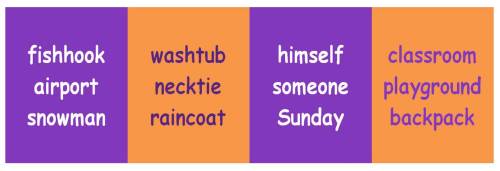
  • A good place to begin is with compound words.  They can be easy to decipher if the child looks for small words inside big words.  Try some with her such as “pancake,” “popcorn” and “forget.”  Make a list of such words and let her be the detective, discovering the small words inside the large words.  Have her circle each of the small words and then pronounce them together.  Some words you might use are:compound words are small words inside big words
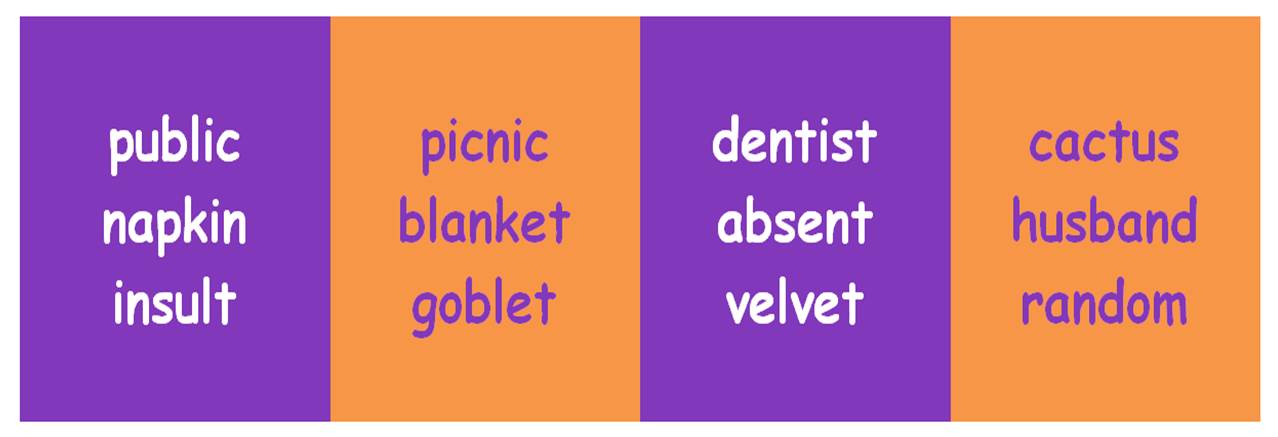
  • Some longer words have pronunciation rules that are easy for a child to remember.  For example, if a six- or seven-letter word has double consonants in the middle (biggest, kitten, flabby), that means the word usually has two parts, or syllables, and the first syllable ends between the “twin” letters.  (Use the word “syllable” since this is a term your granddaughter will need to learn anyway.)  Phonics books sometimes refer to these words as VC/CV or CVC/CVC words since they generally have short vowel sounds in both syllables.  You could practice a handful of those words, writing them on notebook paper for your granddaughter to pronounce.  Choose words whose letters follow the rules of phonics so she is not confused.  Have her draw a line between the double consonants and then pronounce each syllable.  Some words you might use are:"twin" letter words have double consonants in the middle.
  • Some other six- or seven-letter words have one vowel near the beginning, another vowel near the end, and two or three consonants in the middle.  These are a variation on VC/CV or CVC/CVC words with twin conconants.  Show her words like “contest,” “nutmeg” and “insect.”  Explain that the words have two syllables, and that the first syllable ends between the two consonants.  Have her draw a line between the middle consonants and then pronounce each syllable.  Some words you might use are:two syllable words with vowels in the first and last syllable

Our blog will have more on how to teach multisyllabic words in the near future.  Let us know if you find this information useful or if you have particular problems teaching your child reading.  We will investigate for you and offer the best advice we can find.  –Mrs. K and Mrs. A

How do I teach CVC words that end in –ck and words that end in –ook without confusing my son?

When a child is learning to read, and is at the short vowel, one-syllable, consonant-vowel-consonant (CVC) word stage, the child often encounters words from the word family –ook (book and look, for example) or words that end with –ck (sock and truck, for example).  Strictly speaking, these word don’t follow the CVC rule for pronunciation, so they should be taught separately, starting with the –ck family words.

CVC words that end in _ch and _ook.

To enlarge, click on the picture.

Usually there is no problem reading CVC -ck words once the child understands that –ck is a single sound.  But reading, pronouncing and spelling the –ook words can be a problem.  How can you help your child?

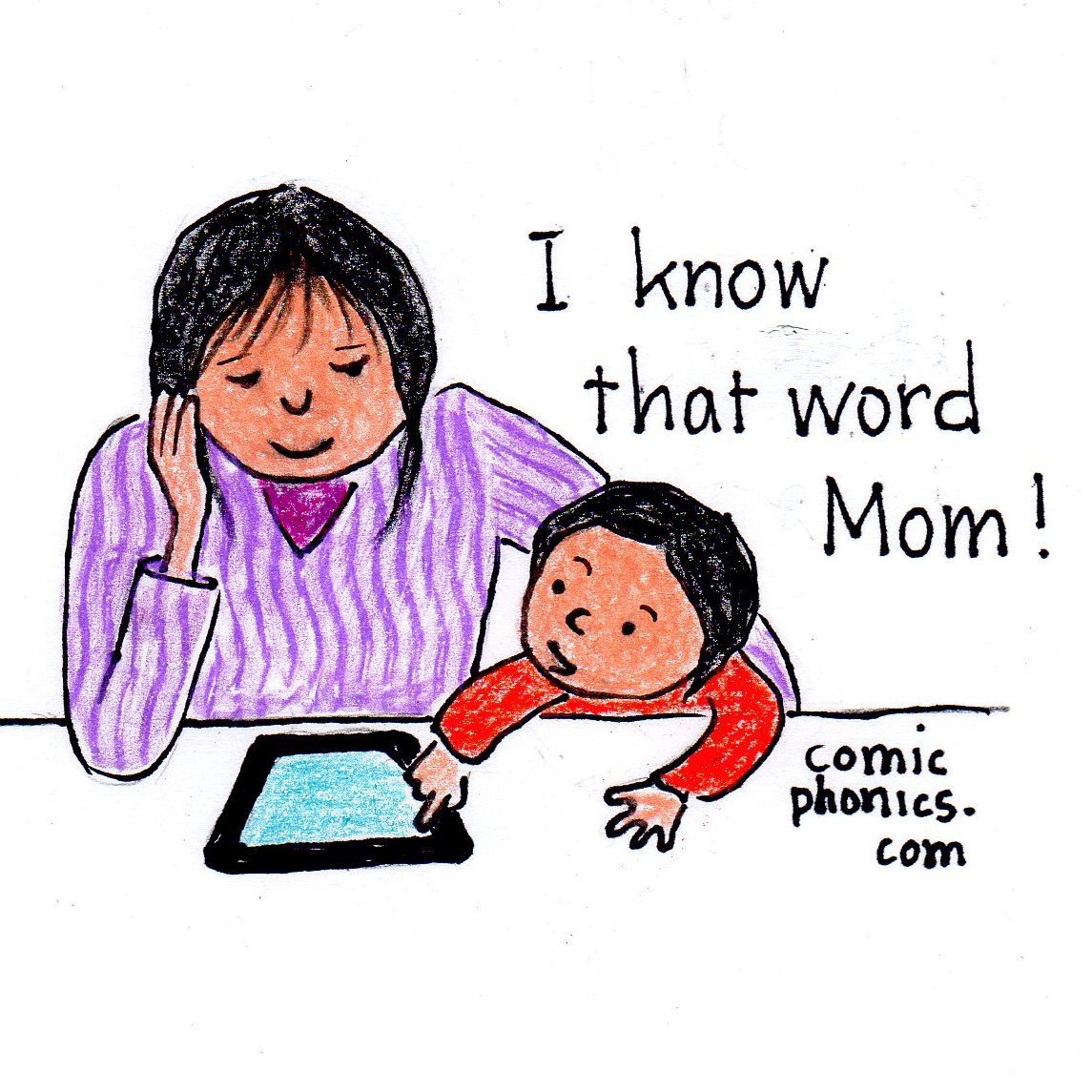
"I know that word, Mom," says the child lookinFirst, wait until your child is comfortable with CVC –ck words (see list above) to explain this difference.   Teach the CVC words that end in –ck first and make sure the child understands how to read, pronounce and spell those words.  Then introduce –ook family words.

  • Point out to your child that the –ook sound is not the same as the short –ock or short –uck sound.  Say the sounds aloud so the child can hear the difference, and ask the child to say the sounds too.  Don’t show letters at this point since it is the sound that guides the child as to which letters to use.  The child needs to be able to hear the difference.
  • If you have pictures of words that end in –ock (clock, dock, flock, knock,), in -uck (buck, puck, suck, tuck, truck) and –ook (book, cook, crook, hook, rook) you could create a set of flash cards for the child to sort by sound.  As the child sorts, ask the child to pronounce the word to be sure she is hearing the word correctly.
  • Tell your child that after a word with the –ook sound, just a “k” is used, as in book and look, two words the child might already know as sight words.  You could create a set of flash cards with the –ook family words on them and use them as sight words if that helps.
  • If you have letter tiles, practice moving them to show –ook family words and ask the child to read them after your example.
  • When the child seems comfortable with the difference in sound, practice moving tiles to show the difference in spelling.  For example, construct l-o-ck, and under it construct l-oo-k.  Say each word and ask the child to tell what he notices.  Do the same with other word pairs such as cr-o-ck and cr-oo-k; h-o-ck and h-oo-k; r-o-ck and r-oo-k; and t-o-ck and t-oo-k.
  • Practice moving tiles so that just one word—lock—appears.  Ask the child to pronounce it.  Take out the -ck and put in –ook and ask the child to pronounce the new word.  Keep moving tiles around until the child grasps the correct pronunciation of each word.
  • When you are reading –ck and –ook words, reinforce the spelling.

At this point the child usually hasn’t learned how to read long vowel sounds, so there is no need to add to confusion by introducing words like bake and smoke now.

How many letter sounds are there in English?

That depends.

The International Phonetic Association (IPA) which devised a method to categorize spoken sounds, says American English has 44 sounds—20 vowel sounds and 24 consonant (and digraph) sounds.  The IPA has devised symbols for each of these sounds—most of them letters of the Latin alphabet with some Greek letters and other symbols thrown in.  Speech pathologists use these symbols to write down the exact sounds a student speaks when they are identifying speech problems.

The International Phonetic Association (IPA) says American spoken English has 44 sounds—20 vowel sounds and 24 consonant sounds.

Click on the chart for an enlarged version.

In general, American English has fewer sounds than British English.  Standard English (usually considered the way English is spoken by someone from the Midwest) has 16 vowel sounds, at least four fewer vowel sounds than standard British English.  Since accents vary from region to region, some parts of the US might have more or fewer vowel sounds.

When a child is learning to read in English, making a sound is not the problem; it is the many ways a single sound can be shown in letters.

Some teachers have tried to help students, especially ESL students, to master the sounds by adding symbols to letters with multiple sounds:  a curve over a short vowel, a horizontal line over a long vowel, and printing two letters that have a single sound as one letter without a space between them.  This does make it easier for the student to associate sounds with symbols, but teachers have found the students grow dependent on the symbols and cannot shift to reading letters without those symbols.

Because students have so much trouble matching a sound to a letter, many reading methods have developed.  However, a study by the U.S. government a few years ago found that a systematic phonetic approach works best with young children learning to read.

My child is struggling to learn short vowel sounds. What can I do?

As a temporary help, you could create word lists or flash cards using color-coded letters for the vowels.

Colors for vowel soundsIn Tutoring is Caring, Montessori teacher Aline D. Wolf suggests printing the letter representing the vowel sound in a particular color to help the child remember the sound.  She suggests using colors whose name has the letter sound that the child is trying to say.  So for example, short e words would be written with red e’s.  Since vowels are the most difficult sounds for the child to master, the color would alert the child that the colored letter is a vowel, and the color would also give the child a clue as to the letter’s pronunciation.

The colors Wolf suggests are

  • Red for the short e sound since red’s vowel sound is short e.
  • Rust for the short u sound since rust’s vowel sound is short u.
  • Silver for the short i sound since silver’s vowel sound is short i.
  • Tan for the short a sound since tan’s vowel sound is short a.
  • Olive for the short o sound since olive’s vowel sound is short o.
  • Black for all consonants.

Wolf says it is important that the child recognize the colors using their specific names.  If a child sees olive and says green, then the clue that the sound of “ol” gives would be lost.  She recommends beginning with “e” and then “u” because they are easier.

Wolf wrote her suggestions in 1981, before personal computers, so today we have other options.  Using a computer, it is easy to duplicate these colored letters in words, just as using crayons or colored pencils makes it easy by hand.

Another suggestion she makes is to use broken lines for silent letters, a signal to the student that the letter is necessary but it is not pronounced.  This is easy to do if you are handwriting the letters, but I could not find a broken letter type face on my computer.  However, the computer offers other options such as outlined letters or highlighted letters, either of which could indicate silent letters.

With her lists of color-coded words, Wolf puts a drawing of a word that begins with that letter at the top of the list as an extra reminder of the letter sound.  So for short e, there is a drawing of an elephant; for u, an umbrella; for i, an igloo; for a, an alligator; and for o, an olive.

Cautioning that color-coding is a crutch, Wolf says it should be used as long as necessary, but that gradually the child should be weaned from the colors.  For children who don’t need the extra boost that colored letters give, they should not be used at all.

How to wean a child?  Wolf suggests that the child could match color coded words with the same words printed in black.  Or the child could match words printed in black with objects around the house or at school such as milk, pan and egg.  The child could also match words with pictures.

My child can read basic words. What kind of literature skills should s/he have for kindergarten?

Most states have adopted a common core of standards now used to teach and to assess children’s learning at each grade level and in academic subjects.  Included in these standards are ones for kindergarten reading which include understanding literature, informational texts and reading skills.  Those standards are

kindergarden literature skill standards

Go to http://www.corestandards.org/ELA-Literacy/RL/K for more on the common core of standards.

Key Ideas and Details

  • With prompting and support, the child should be able to ask and answer questions about key details in a text.
  • With prompting and support, the child should be able to retell familiar stories, including key details.
  • With prompting and support, the child should be able to identify characters, settings, and major events in a story.

Craft and Structure

  • The child should be able to ask and answer questions about unknown words in a text
  • The child should be able to recognize common types of texts (e.g., storybooks, poems).
  • The child, with prompting and support, should be able to name the author and illustrator of a story and define the role of each in telling the story.

Integration of Knowledge and Ideas

  • With prompting and support, the child should be able to describe the relationship between illustrations and the story in which they appear (e.g., what moment in a story an illustration depicts).
  • With prompting and support, the child should be able to compare and contrast the adventures and experiences of characters in familiar stories.

Range of Reading and Level of Text Complexity

  • The child should actively engage in group reading activities with purpose and understanding.

For more information, go to www.corestandards.org/ELA-Literacy/RL/K

How can I teach my child vowel sounds?

I have followed a low tech system somewhat similar to teaching consonant sounds, but a system that is a little different too.  This phonetic approach works well with ESL students, young native English speakers getting ready to read and even adults because it makes learning fun.

Looking "over the shoulder" of a young girl sorting pictures of things that have a short A sound when spoken.

To enlarge, click on the picture.

  • I make a set of a dozen or more picture cards for ă:  apple, astronaut, alligator and ax (which begin with ă sound), and other CVC words using ă such as hat, man, dad and bag.
  • I also make one card with ă written on it.
  • At the same time, I make picture (flash) cards with pictures for the other short vowels, and I take some of those cards and temporarily add them to the ă deck.
  • Knowing that discerning vowel sounds is hard, I put the apple card next to the ă card and say the word apple many times, focusing on the vowel sound.  Slowly I help the child say the words in the deck of cards and place the cards near the ă card or in a discard area.
  • When the ă sound is learned (usually this takes several sessions), I take ĕ, ĭ, ŏ and ŭ words, and one short vowel at a time, go through the process with each sound.  Because ĕ and ĭ are hard to distinguish, I do them after ă, ŏ and ŭ, and spend more time on them.
  • Then I start mixing up two of the sounds, such as ă and ŏ.  I put both the ă and ŏ cards on the table, and take the picture cards for only those two sounds, shuffle them, and go through them with the child.  Once the child can distinguish those sounds, I gradually add ŭ to the mix and have the child sort ă, ŏ and ŭ.
  • I leave ĕ and ĭ to last and do those two letters together before I include them with the other short vowel sounds.  It takes many weeks of practice to distinguish ĕ and ĭ sounds.  When the child has mastered them, I add the other three vowels to the deck and the child sorts all five short vowel sounds.
  • When the child has mastered all five short vowel sounds, I go through the same process with ā, ē, ī, ō and ū.  The process for the long vowels goes quicker than for the short vowels.
  • As I move on teaching the child other sounds, I review the vowel sounds if I notice the child is forgetting some of the sounds or mixing up any of them.  This happens with every child I have taught.

Preschoolers and primary school children like this method of learning because they are learning through a game.  They like the control they have—holding the cards and placing them.  They like working one on one with an adult tutor who is paying special attention to them.  Sometimes I do one card and the child does one card to emphasize the fun of learning.  No worksheets, no writing—just fun.  Yet children learn their letter sounds.

Is there a low tech, inexpensive way to teach my children their letter sounds?

I’ve had success teaching reading to brand new readers by matching pictures to the correct letter using homemade flashcards.  Both native English speakers and ESL preschoolers have found this a fun way to learn letter sounds.  It can be done in five minutes here and there, making it a good way to teach children with short attention spans.

Child sorting picture flash cards to match with the letter B.

To enlarge the picture, click on it.

I suggest you try this method:

  • Cut some index cards in two, each about 3 by 2 ½ inches.  Or use the index cards whole if you prefer.
  • On ten or twelve blank cards, paste pictures of words which begin with the same consonant sound, such as the letter “b.”  Use pictures of a ball, a balloon, a bear, a banana, a ballerina and others until you have about ten to twelve cards with “b” pictures.
  • On another ten or twelve blank cards, paste pictures of words which begin with other letters, such as an apple, a cat, a dog, a kite and a piano until you have about the same number of cards as “b” cards.
  • On one blank card write or paste a capital B and a lower case b, “Bb.”
  • Lay the card labeled “Bb” on a table.  Shuffle all the picture cards, or let your child do that.  The more she can participate in the process, and eventually control it, the more likely she is to be eager to play the “game.”
  • Now taking one card at a time, have your child say the word of the picture.  Emphasize the “b” sound for her, and ask her if the card starts with a “b” sound.  If so, tell her to put the card next to the “Bb” card.  If not, tell her to put the card a little distance away.
  • Keep doing this until you have gone through all the cards and made two piles of picture cards.
  • With practice, your child will be able to match the words to the letter quickly.
  • After she has mastered “Bb,” make a set of cards using another consonant sound.  You can keep the same set of random cards or add to them.  Some of the random cards will eventually become the letter cards, so you need to add to that group of cards as you develop more letter cards.
  • Begin with the 16 consonants which almost always sound the same:  (Bb, Dd, Ff, Hh, Jj, Kk, Ll, Mm, Nn, Pp, Qq, Rr, Tt, Vv, Xx and Zz).  You don’t want to  do the ABC’s in order, starting with Aa.  Begin with any of the consonants I just listed.  If the child’s name is Tom, start with “Tt.”  If it is Hannah, start with “Hh.”
  • Try not to use pictures of words that start with blended sounds.  For example, don’t use “blue” or “braids” yet.  Later, after the child is sure of the single sound of a letter, you can start combining letter sounds.
  • Don’t start with a consonant that has multiple sounds, such as Gg, Ss or Cc.  For starts, choose letters and words that follow the rules of phonics.  Try to reduce confusion as much as possible.
  • Also, don’t start with vowels.  I teach vowels slightly differently.  I’ll tell you about that in my next blog.

Perhaps this sounds like too much work?  I use the cards over and over with new reading students, so for me the time it took to make the cards was well worth it.  If you have more than one child, you too can reuse the cards, and if you laminate them, they last forever.  (Laminating is expensive, but clear packing tape protects the cards well.)  And the cards are easy to make.  I made mine while watching TV.

In addition to being low tech, the cards are an inexpensive method to teach sounds.  A pack of index cards; old books, magazines or stickers to use for pictures; and tape together probably cost a few dollars and can be used to create many sets of cards.

How about you?  Were you taught your letter sounds by another low tech method?  How are you teaching your children their letter sounds?  Tell our readers by clicking the comment button.