Best illustrated children’s books of 2016, according to The New York Times

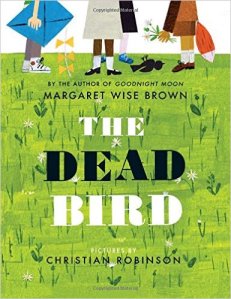
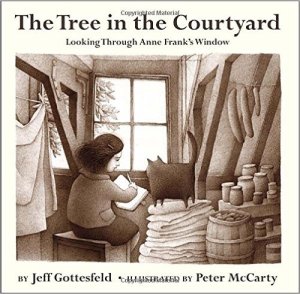
The New York Times Book Review judges picture books published in the past year and chooses the best ones based only on the illustrations.  The covers of this year’s ten winners are shown below.

Picture books about voting and elections

With the election looming, this is a great time to read about how a president is elected.  Below are five picture books which get the job done.

Vote!  by Eileen Christelowvote

This book introduces children to the fundamentals of voting, including political parties, campaigns, pollsters, debates, voter registration and casting ballots.  The candidates’ dogs try to figure it out.

Vote for Me!  By Ben Clantonvoteforme

A donkey and an elephant seek votes and after a while, resort to exaggerating, name-calling, making silly promises and even slugging mud at one another.  This satirical view of an election is told in red and blue.

Grace for President by Kelly S. DiPucchiograceforpres

When Grace hears a woman has never been elected President, she decides to run in her school’s election.  She soon figures out it’s not easy to get elected.


If I Ran for President by Catherine Steirif_i_ran

What would you need to do to run for President?  This picture book shows how you would develop a platform, choose a vice president and campaign for votes.


1vote2votes

One Vote, Two Votes, I Vote, You Vote by Bonnie Worth

The Cat in the Hat explains American democracy.  Why are elections in November?  Why do political parties exist?  The focus is on electing the President, all told in rhyme.

For more book selections, go to http://www.goodreads.com/list/show/25617.Children_s_Books_About_Voting

What kinds of questions help students learn?

Asking the right kinds of questions can help students learn, according to Robert J. Marzano*, an expert in the field.  He divides questions into four kinds, those that elicit

Students shouting I Know to teacher

  • details (narrow information or facts),
  • characteristics (general information about the category into which the details fit),
  • elaborations (enhanced details about the information within a category, including the reasons why certain things happen) and
  • evidence (sources that bolster or debunk the reasoning made by the student when elaborating, or reconsideration by the student of his own thinking and logic ).

Let’s apply his ideas to some reading that children do.

For third graders reading Judy Blume’s Otherwise Known as Sheila the Great,

  • Details: What are some things Sheila is afraid of?  Where does Sheila live most of the time?  Where does she go on vacation?
  • Characteristics: Is Sheila the Great a book of fiction or nonfiction?  What kind of fiction?  Can you name some other books that fit into this category?
  • Elaborations:  Why is Sheila afraid to learn to swim?  Why are other kids afraid to swim?  Are they the same reasons why some kids are afraid to ride bikes or to touch spiders?
  • Evidence: Where could you find information about why kids are afraid to swim?  If you use the internet, what key words would you use to find out?  If you talked to a person, what person would be an expert?  a non-expert?

For preschoolers being read William Steig’s Sylvester and the Magic Pebble,

  • Details: What kind of animal is Sylvester?  Where does Sylvester find the magic pebble?  What kind of animal scares Sylvester?
  • Characteristics: Are there really such things as magic pebbles?  What do we call stories that are make-believe?  Can you think of another make-believe story?  Why do children like make-believe stories?
  • Elaborations: Why is Sylvester sad after no one can see him?  Why are his parents sad?  Would I be sad if you were lost like Sylvester?
  • Evidence: If you became lost, who could you go to so I could find you?  What would be some information about me that you could tell the police?

Each level of questions becomes harder to answer, so if you use this questioning strategy, begin with details questions and work your way to harder questions. The first two levels, details and characteristics, can be asked of a group, but the other two levels require more thought and might better be considered through discussion.  Evidence-based questions might require time to answer, so might be given as homework, or be talked over again when the child has had time to consider his response.

To make this line of questioning easy on you, the parent or teacher, think details first, then genre and characteristics of that genre, then questions beginning with “why,” and last sources for more information.

*Marzano heads Marzano Research Laboratory and is author of books on teaching.  He wrote about this questioning technique in the February 2013 issue of Educational Leadership.  For examples of his questioning technique, go to   http://www.ascd.org/ASCD/pdf/journals/ed_lead/el201302_marzano.pdf.

7 good practices for getting after school homework done

  1. Establish a place to do homework. This might be a desk in her bedroom, the kitchen table or the coffee table.  It will have good lighting and be quiet.  No radio.  No TV.  No video games.  No cell phone calls.
  1. EPSON MFP imageProvide necessary supplies. Sharp pencils, erasers, pens, colored pencils, notebook paper, a tablet or laptop, and a good dictionary should be at hand.
  1. Establish a time for homework. This could be immediately after school, or after a snack, or after an early dinner.  Try to make it routine with visual, sound or other clues.  The kitchen table is cleared and homework begins.  The piano practicing is done and school homework begins.
  1.  Make a habit of doing the hard homework first. Once it is out of the way, the child will relax and be able to do her other homework without thinking about the tough homework still to come.
  1. Anticipate the child’s needs. If your child has difficulty keeping on task, sit by her and encourage her.  Interrupt her daydreaming.  Fetch her a bottle of water so she needn’t get up.  Make sure she has sharp pencils.  Remove baby brother so she can focus.
  1. Establish yourself as a “go to” person. Encourage her to go to you to ask questions if she doesn’t understand directions or a vocabulary word.  Explain a concept if she doesn’t get it.  Ask questions if she seems stuck.  Offer hints.  Find another explanation online and read and discuss it together.  Offer easy examples.
  1. Don’t do your child’s homework. For her to learn to think, she needs to do the work herself.  Help her to persevere through the difficult assignments, but don’t do them for her.
  1. Create a reward for her hard work. Tell her you know she has worked hard and you are proud of her.  Fix her a warm bath or shower.  Read her a book in bed or tell her a story.  Develop bedtime routines that relax and reward her for doing her work.

Keep a paper trail of your child’s education

If you are to be an effective advocate for your child, it helps to have concrete evidence to support your position.  Just like an attorney bolsters his defense with photographs, emails, voice recordings, fingerprints and DNA, you can bolster your defense of your child and his needs with evidence.

EPSON MFP image

EPSON MFP image

What evidence should you be collecting?

  • Report cards from school, day care centers, preschools, tutoring centers or private tutors.
  • Evaluations by teachers, psychologists, reading specialists occupational therapists and other professionals.
  • Email strings with educators about your child.
  • Medical records of all regular physicals and ER visits and lists of medications taken and names and dates of illnesses.
  • Dated samples of the child’s work, especially ones with teacher comments.
  • Observations from people who know the child well—grandmothers, coaches and friend’s parents, but especially you. From the moment you suspect there might be something out of the usual, begin a diary and regularly report your observations.
  • Your own notes of meetings with teachers and other educational specialists. As soon as the meeting is over, write down what happened, what was discussed, and what actions were decided on.  Get others at the meeting to vouch in writing for the accuracy of your observations.  This might be with their signatures or with a return email.
  • Lists of books and other materials the child has read with dates.
  • Excerpts from laws which govern that aspect of education for which you are advocating.

How should you collect this information?  Create a file for your child.  It could be a hanging file in your file cabinet, a large envelope, or a three-ring binder.  If the information comes to you online, you could create an online file, but it is good to make a hard copy as well, something you can bring to a meeting.

You might be thinking this degree of record keeping is ridiculous.  But if you are to be a good advocate for your child, you will find it easier if you have “proof” of your observations and concerns.  Educators and their attorneys will listen to you more respectfully if you come prepared with data to back up your points.  Sometimes, this is the only way to get your child the education he deserves and that the law requires.

What is the best place to do homework for an elementary school student?

A desk in a bedroom?  The kitchen table?  The public library?  Is there a best place for little kids to do homework?

boy reading

A child’s bedroom offers privacy away from house noise. On the bed, on the floor, at a desk—the child has options for posture.  For a self-sufficient and focused child, a bedroom can be great.  But for a daydreamer or a procrastinator, a bedroom can be disastrous.  Also, bedrooms are usually upstairs or down the hall from the refrigerator.  And Mom or Dad are in another part of the house, making it difficult to consult with them.  Kids like to hang around the family in the evening.

The kitchen table or counter offers little privacy and is busy—the dishwasher chugging, someone cooking, and the family crisscrossing the room.  For a child sensitive to noise, the kitchen table is not ideal.   But for a child who needs someone prodding him to continue his work, it can be ideal if noise and distractions are limited.

The family room couch and coffee table can be great.  They offer a comfy seat and various postures.  They  are near the kitchen.  But what if Dad wants to watch the TV news at 6:30?  Or the baby or dog is crawling around?  The rest of the family has to respect the student’s need for quiet.

Girl reading Junie B. Jones.

The floor can be a great homework area, especially if the child has a mat designated for homework.  Roll it out in any part of the house, and the child can sprawl and relax her body.  But again, the rest of the family needs to respect the student’s need to focus without noise.

Public libraries are generally not good for young children unless they need to work on a group project.  Then some libraries have private conference rooms where children can talk, exchange ideas and work together, providing an adult reserves and is responsible for the room.  Transportation can be a problem for some students.  If a student does not own a computer, and if he needs to do internet research, a library can be a great place to work.  Reference materials abound.  But usually an adult needs to reserve a computer, and transportation can be an issue.  Some libraries are not open evenings.

The best place to do homework depends on a number of factors—the student’s personality and study skills, noise levels, hunger, interruptions, time of day, transportation—so there is no perfect spot.

I did homework at the dining room table surrounded by my brothers and sisters while another one practiced the piano in the next room.  The older children acted as experts to the younger children, and our mother looked over our shoulders frequently.  Ideal?  Maybe not, but it worked.

Let your child try many different places.  After each one, ask him to consider why it worked or not.  The more the child knows about his learning style, the more he can determine what kind of environment works best for doing homework.

What words should fourth graders know?

If you had to devise a list of 100 vocabulary words that every fourth grader should know, what words would you include?  (You can assume fourth graders already know basic words like “no” and “went,” and words learned in previous grades, words like “multiplication,” “noun,” “habitat” and “community.”)

EPSON MFP image

Would you include “jar” on your list?  How about “malicious”?

Both words made the list compiled by the editors of the American Heritage Dictionary.  See if you know them all:


accommodate
afterthought
allegiance
aloft
ancestor
anticipation
antics
apparel
ascend
beckon
brink
catastrophe
coax
compassion
complexion
content
courteous
cringe
derelict
dignity
distaste
dormant
elaborate
endure
enforce
exertion
expanse
extraordinary
foliage
foremost
frank
function
futile
gaze
glimmer
glimpse
grimace
headstrong
hesitate
hoist
immense
imperceptibly
indication
inscription
instinctive
intent
interior
jar
keepsake
knack
literacy
lurch
makeshift
malicious
massive
meager
melancholy
merge
mingle
minuscule
momentary
nape
nimble
obstinate
opt
overwhelming
pact
pandemonium
persuade
phenomenal
ponder
quantity
quaver
quench
radiant
ravine
recipient
resentful
satisfactory
sensitive
sentiment
shudder
sickly
sleek
solemn
soothe
stagger
stern
tantalize
temptation
transform
unscrupulous
vain
vengeance
violate
vital
vivid
wistful
yield
zest

If you are working with your child on expanding her vocabulary, and you are not using a vocabulary book, this list might be a good place to begin.  (It comes in book form at the American Heritage Dictionary website, https://www.ahdictionary.com/word/hundredfourth.html.)

  • Start with one or two words a day. It’s better to learn the words slowly and remember them than to cram and later forget most of them.
  • Ask your child to pronounce the new word first, and make sure she can read and pronounce it correctly.
  • Explain the meaning or meanings. Some of these words, like “frank” and “vain,” have multiple meanings.  Make sure your child learns all the commonly used ones.
  • Ask her to write each word in a sentence which demonstrates the meaning. “I see a nape” does not show that the child understands the word “nape,” but “The barber buzzed the hair on the nape of Dad’s neck” shows the child does understand.
  • Review, review, review. The more times the child encounters the words, the more likely she is to remember and use them herself.

Dr. Seuss almost banned. Other books really canned.

Did you know that that even Dr. Seuss books have irritated readers so much that they tried to get them banned from school and library shelves?

See if you can identify why the books below, usually read in elementary and middle grades, were challenged and in some cases banned.  Answers will appear at the end.  (Some questions have more than one correct answer.)

Image result for hop on Pop illustration

1.  Why did a patron of the Toronto, Canada, Public Library want Hop on Pop by Dr. Seuss banned in 2014? (It wasn’t.  Phew!)

a.  imperfect rhymes

b.  too dark a theme for little children

c.  encouraging of young children to use violence against their fathers

Image result for If I ran the Zoo book images

2.  Why did patrons of the Vancouver, Canada, Public Library want If I Ran the Zoo by Dr. Seuss banned in 2014? (Again, reason prevailed.)

a.  Vancouver doesn’t have a zoo.

b. Illustrations show Asians with slanted eyes.

c.  Illustrations of snakes were too scary for children

Image result for Of Mice and Men illustration

3.  Why did two parents of the Brainerd, MN, School District want John Steinbeck’s Of Mice and Men banned?

a.  Japanese people were referred to as Japs.

b.  Jesus Christ was used as a curse word.

c.  The n-word (the actual word) was used to describe African Americans.
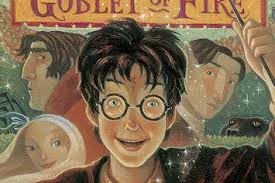
Image result for Harry Potter book illustration

4.  Why were the Harry Potter books by J. K. Rowling challenged hundreds of times by religious groups within the first two years of publication?

a.  violence

b.  occult/Satanic themes

c. anti-family themes

Image result for The Giver illustration

5.  Why was The Giver by Lois Lowry ranked eleventh for books most frequently asked for removal from schools from 1990 to 2000? (It was removed about one-third of the time.)

a.  violence

b.  too dark a theme for children

c.  too few women characters

Image result for To Kill a Mockingbird illustration

6.  Why was To Kill a Mockingbird by Harper Lee challenged in Eden Valley, MN, in 1977 and temporarily banned?

a.  It used the words “damn” and “whore lady.”

b.  It depicted a bigoted aunt who expressed her views using the n-word.

c.  The Humane Society objected to the way a rabid dog was killed.
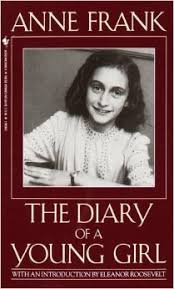
 

Image result for Diary of Anne Frank illustration

7.  Why was Anne Frank: The Diary of a Young Girl by Anne Frank challenged but not banned by the Northville, MN, middle schools in 2013?

a.  too realistic description of Nazi atrocities

b.  too realistic description of a girl’s anatomy

c.  The diary was published without the author’s permission.


Image result for No Fear Shakespeare Romeo and juliet illustration

8.  Why did some parents in Liberty, SC, in 2013 want No Fear Shakespeare; Romeo and Juliet by William Shakespeare banned?

a.  suicide

b.  underage marriage

c.  mature sexual theme

Google “banned books” and you’ll see that the list of banned books is long, though fortunately, most books’ placement on the list has been short-lived.   Eighty years ago the Nazis had book-burning bonfires, but today Europeans read those same books unimpeded.  Luckily, we live in a time of the internet, when it’s almost impossible to ban books any more.

  1. c
  2. b
  3. a, b, c
  4. a, b, c
  5. a, b
  6. a
  7. b
  8. c

How to make reading nonfiction easier

Here is a pattern I have taught second graders, but  children of all ages can benefit.  It works especially well for reading nonfiction which is usually harder than reading fiction.

boy reading on the floor

First, before reading the text,

  • Read the title and think about what it means. Then look at all the photos, drawings, charts, cartoons, maps and tables.  Try to figure out what they mean.  From all them, try to figure out what you will be reading about.
  • If there are subheadings, read them. Go through the whole article and read them.  If you are reading a book, read chapter headings.  Ask yourself, what is this about?  Try to predict what you’ll be reading about.
  • If there are vocabulary words in the margins or highlighted in the text, read them and their definitions. Say them out loud, and if you can’t, ask an adult how to pronounce them.

Now you are ready to read the text.

  • The most important thing to figure out is the main idea. Often in nonfiction, the main idea is stated at the end of the first paragraph.  But sometimes the first paragraph is a hook, so the main idea comes later.  Reread the title and find words in one of the first paragraphs which say the same thing.  If you own the book, underline or highlight the main idea and in the margin write “main idea.”  If the book cannot be written in, start a mindweb on a separate paper with the main idea in the center.  Or write “main idea” on a sticky note and paste it over the main idea in the text.
  • The next most important thing to figure out is shich details are important. Underline them or add those ideas to your mind web.  It’s easier to study a mindweb than it is to study a whole lot of paragraphs.
  • Highlight or write down the words you don’t understand. Then write down their meanings.  Sometimes there are clues in the nearby words, or the book contains a glossary.  Or you can ask someone.  Or you can use a dictionary.
  • If some idea is difficult to understand, ask someone to explain it.  If you can find a young child’s version of the information, that is a good place to start.  Online sources might say what you need to know in an easier way.

When I work with my son on reading, should he read silently or should I interrupt and ask questions?

If you are working with your son, you should be involved.  What does an involved reading teacher do?

  • Before he reads a selection, you could read it, understand it, and preview it with your son. That does not mean giving away the ending if it is a story.  But it might mean explaining the setting or motivation of the main character.  In nonfiction, it might mean showing him a map or other graphic to make the reading easier to comprehend.

Tutor teaching a child.

  • Before reading, you and your son together could look at any graphics accompanying the article. You could ask him to interpret the graphics to be sure he understands the data.  You could ask him to read headlines and subheadings, and then ask him to predict what he is about to read.
  • If he has trouble pronouncing words or if he slurs big words, ask him to read a short section at a time aloud. Go back to the words he missed and discuss them, asking him to pronounce them, writing the words in syllables on notebook paper so he can see the structure of the word, explaining prefixes, suffixes or word roots.  If there are vocabulary words you suspect he might not know, ask him the meanings, and if he can’t explain them correctly, discuss their meanings.  Then ask him to read that part of the selection again.
  • Now ask him what it means. Don’t accept, “It’s about a farm,” but ask for more specific meaning.  “It’s about a small baby pig that a farmer is going to kill.”  Ask him if his prediction was right or should he change it.
  • Fluency can only be judged by a teacher if the child reads aloud.  Listen for pacing, inflection, changing of voice tone, loudness or softness.  If you know your child is a fluent reader, you needn’t have him read aloud often for fluency.  But if he is not a fluent reader, you might want to read a sentence at a time using fluency and have your child mimic you.
  • If you read along silently, and your child finishes a selection long before you do, probably he is racing. Ask him about the meaning.  If his answer is vague, ask him to read again but slower.
  • If your child is a competent reader, your job might consist of asking for feedback—orally or written. If your child is reading fiction, you might ask about setting, characters, theme, ups and downs in the story and the climax.  If he is reading nonfiction, ask for the thesis and organization of the article.  Ask a question which the article answers and let the student find and read the part which answers your question.
  • If you can’t be engaged with your child during the reading, you could leave questions to answer so you know the child has paid attention.

Good teachers interrupt when they hear mistakes or hesitancy.  They ask questions if they suspect the student is not understanding.

But if your son is reading strictly for his own pleasure, back off.  Maybe when the day’s reading is done, ask him what his reading selection was about or what he liked, but don’t pressure him.  If he is asking you questions like, “Hey, Mom, what does contentious mean?” or “Why do hunters want elephant tusks anyway?” he is doing what you want—consulting an expert when he doesn’t understand.