
To improve a student’s reading comprehension, asking “What’s the main idea” of a reading passage is not enough. It’s just the starting point.
Better is to provide richer texts, and to discuss them before, during, and after a student reads, according to research named in the 2-18-24 issue of Edutopia. 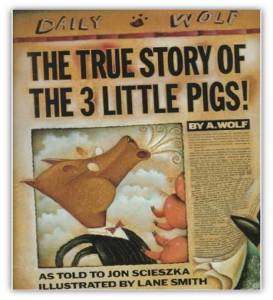
It’s better to ask about an author’s writing style. Why does the big bad wolf say three times, “I’ll huff and I’ll puff and I’ll blow your house down” to the three little pigs? Why use “huff” and “puff” which rhyme? Why not say, “I’ll breathe in and I’ll breathe out and I’ll knock your house down”? Why does the author of Gone with the Wind have Scarlett O’Hara meet Rhett Butler on the day the Civil War begins? Why does the author have Melanie Wilkes give birth in Atlanta right as Atlanta is being attacked?
It’s better is to ask a student to summarize or paraphrase a text than name the main idea only. Many students have trouble distinguishing between important facts or ideas and less important details. Help them figure out what are the important ideas so they can produce a reasonable summary. Many students rely on the actual words of a text to explain it and cannot put the ideas into their own words. Paraphrasing forces them to do that.
It’s better is to ask a student to describe the text’s structure. Is a cause explained at the beginning of a text, and are its effects described in the second part of the text? Are the most important facts stated first, as in a news story, and less important facts stated later in descending order? Is a long-time theory stated first, and then is research presented to debunk the theory—or to support it?
It’s better is to ask a student to describe the tone and the mood of a text. Tone means the attitude of a writer toward a subject or an audience conveyed through word choice and the style of the writing. Does the writer show approval of a character or an idea? Does a writer dismiss an idea as frivolous or bigoted? Mood is the feeling or atmosphere of a text perceived by the reader. It is often created by the author’s use of imagery and word choice. When Laura Ingalls Wilder describes fall in Silver Lake as “From east to west, from north to south, and as far up into the blue sky as eyes could see, were birds and birds and birds sailing on beating wings,” is the mood one of fear? suffocation? wonder? How do you know?
It’s better is to ask a student to find, identify and explain figurative language. When Romeo says, “Juliet is the sun,” what figure of speech is Shakespeare using? Why does this line occur in a passage that focuses on light? Is “Juliet is the sun” stronger or weaker than “Juliet is like the sun”? In Lord of the Flies, what figure of speech does the author use when he says of palm trees, “These stood or leaned or reclined against the light”? Why not say some trees’ trunks were straight up, some leaned over, and some tipped so much that they were almost parallel to the ground? And why “against the light”?
It’s better to ask why the author of a novel reveals some information in the opening chapters and holds other information until later. In Cinderella, why does Cinderella face problem after problem before the happy ending? Why does Junie B. Jones believe her baby brother is a monkey until the end of the book?
Require more of students and you will increase the depth of their reading comprehension.


 comicphonics for early readers