
- What percentage of fourth graders are proficient in reading*? Proficient means students can read fluently and understand what they read. They no longer need to decode words or ponder vocabulary words.
- 30-31%
- 49-50%
- 63-65%
- 82-83%
- Students in the basic (lowest) reading group by fourth grade
- are less likely to finish high school.
- are more likely to be poor as adults.
- are more likely to be jailed.
- are more likely to remain basic readers the rest of their lives.
- Research shows the best way to learn to read is
- to memorize words based on how they look on a page.
- to guess at new words in context.
- to use phonics to sound out letters and syllables.
- to use any one of these methods consistently.
- Do US teacher prep programs still teach aspiring teachers that “balanced literacy” approaches rather than explicit, systematic phonics are the best ways to teach reading?
- What approach does your child’s teacher use to teach reading?

And the answers are
- 30-31% of US fourth graders are proficient readers, a drop from 37% in 2017. Even more fourth graders–35-37%–are considered basic readers, meaning they cannot read at their grade level in school. So about a third of students are doing well, another third are getting by, and another third are behind.
- All the answers are correct.
- Research** shows that phonics-based reading is the best approach for young children.
- Yes, about 40% of teacher prep programs do not teach a research-supported way to teach reading***.
- If you don’t know, you can ask. As an advocate for your child’s successful future, you have a right to know if your child’s teachers are following the best practices based on research.
*According to the 2024 National Assessment of Educational Progress.
** According to the National Reading Panel, authorized by Congress in 2000 to study research on reading to learn what method of instruction works best.
***According to the National Council on Teacher Quality.
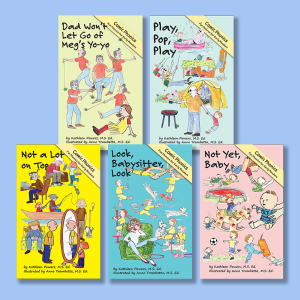


 comicphonics for early readers