
This fall I am teaching two kindergarteners to read via Zoom. I am making progress with both students, but it is an uneven progress typical of young children.
One student—I will call her Jane—is lighthearted and imaginative. For Halloween, she came to class wearing a wolf’s face. Jane is social, engaging me in conversation as easily as she talks to her sibling. She can identify almost all letters and letter sounds. When I show her an alphabet letter, she will say, “Maybe B, for banana and ball.”
Jane is working on reading two-letter “A” words like “at” and “ax.” Three-letter words are a bit advanced except for a few she has memorized. Her mother tells me that outside class she loves to mix up letters and to make silly sounds.
John is serious and reserved with me. He does not engage in chit-chat during our lesson. Two months ago, he could identify fewer letters and their sounds than Jane could, but now he has mastered them all. He pronounced two-letter “A” words with such consistency that we have moved on to three-letter “A” words. At our lesson this week John read several phrases and a few sentences containing short “A” words (A fat cat sat. A man ran in a can.). I was thrilled. He smiled and said nothing. At our next lesson we will begin to work on short “O” words.

Both Jane and John are normal kindergarteners, displaying behaviors typical of children learning to read. One is not better. One is not worse. They are each moving along at their own pace.
Learning to read is not like learning algebra. With algebra, every student starts at the same place on page one of the text and is expected to keep up with the pace the teacher sets for covering the curriculum within a school year.
With reading, students start at different places depending on personality, preschool or parental exposure to letters and sounds, hearing and vision acuity, being read to, and speaking English as a native language or as a second language. Age of the student is another factor.
By the end of kindergarten, both John and Jane should have a solid foundation in phonics. They will continue instruction in how to read in first and second grades. At that point their reading skills will probably not be any more identical than they are now. But they will read sufficiently well to use their reading skills to learn more. That’s why we learn to read, after all—so we can keep learning.
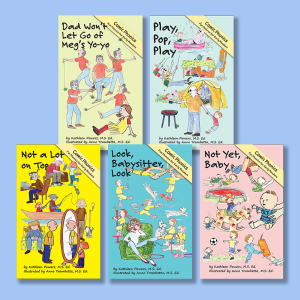


 comicphonics for early readers